Addressing Reconnaissance Gaps for Indoor Personnel and Weapons in Urban Narrow-Space Operations with Laser Range-Gated Imaging
In urban narrow-space operations, such as clearing a hostile room within a tight corridor or securing a confined stairwell, a critical reconnaissance gap emerges when traditional optical systems fail to deliver clear imagery of indoor personnel and weapons. Windows, glass doors, or even vehicle windshields—common transparent barriers in these environments—often reflect ambient light or are obscured by smoke, fog, rain, or fire. The resulting backscatter and glare wash out details, leaving operators unable to confirm the presence, position, or armament of adversaries. This blind spot can mean the difference between a successful intervention and a catastrophic ambush. Conventional daylight cameras and night vision devices struggle under such conditions, while thermal imagers may confuse body heat with hot surfaces or fail altogether through glass. The pressing need is for a solution that can pierce through these optical obstacles and deliver high-contrast, real-time visual intelligence without relying on non-optical methods.
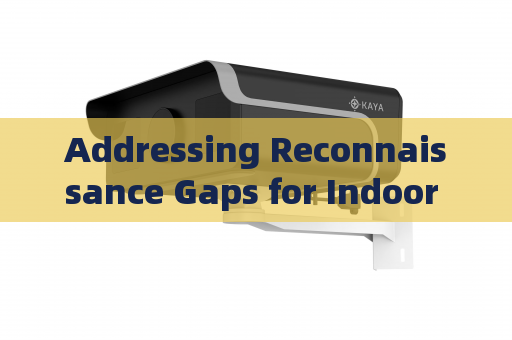
A penetrating imager—specifically a laser range-gated imaging system—directly addresses this reconnaissance challenge. This active imaging instrument employs a high-repetition-rate pulsed laser, an intensified gated camera incorporating a microchannel plate (MCP) image intensifier, a high-voltage module, a timing sequencer, a beam expander, and an imaging lens. By emitting short laser pulses and synchronizing the camera’s electronic shutter—the “range gate”—to open only when reflected light from the intended target distance arrives, the system effectively rejects backscatter from fog, rain, smoke, or glass surfaces. This principle allows the penetrating imager to “see through” transparent optical media such as window glass, automotive windshields, aircraft portholes, or glass curtain walls. It also operates reliably in the presence of fire, haze, rain, snow, and mist, achieving high contrast and resolution at extended ranges. Unlike passive devices, this active optical system maintains clear images even when the target is behind a reflective pane or in a dimly lit interior.
In a real-world urban narrow-space scenario—for instance, a hostage rescue team approaching a room through a smoke-filled hallway with a large glass observation window—the penetrating imager delivers decisive operational advantage. An operator can stand at a safe distance, aim the imager through the window, and instantly discern a suspect’s silhouette, the outline of a rifle, or the position of a hidden explosive vest. The system’s ability to suppress glare from the glass ensures that no false reflections mislead the tactical picture. Fire and smoke emanating from a nearby source, which would blind conventional cameras, become manageable: the imager enhances visibility through fire-affected zones by three to five times, though it remains ineffective against dense, opaque smoke. The laser range-gated technology does not rely on any penetrating radiation or sound waves—it works purely within the optical spectrum, using light to overcome light-based interference. This makes it legally and operationally suitable for indoor environments where non-optical detection devices like radars or X-rays would raise concerns.
Further refining the application, the penetrating imager integrates seamlessly with existing tactical gear. Its compact form factor allows it to be mounted on a helmet, rifle rail, or handheld gimbal for use in tight corners. In a narrow staircase, for example, an operator can scan through a small window on a reinforced door to identify a weapon held by a suspect crouched behind furniture. The system’s high-resolution imagery reveals not only the person but also the specific weapon type—pistol, submachine gun, or shotgun—enabling precise threat assessment before breaching. The timing sequence can be adjusted to focus on a specific depth, eliminating clutter from objects closer or farther than the target. This depth-selectivity is crucial in narrow spaces where multiple layers of glass or netting may exist. Ultimately, the penetrating imager closes the reconnaissance gap for indoor personnel and weapons, providing law enforcement and military units with a reliable, optical-only tool to gain visual confirmation in the most challenging urban confined environments.