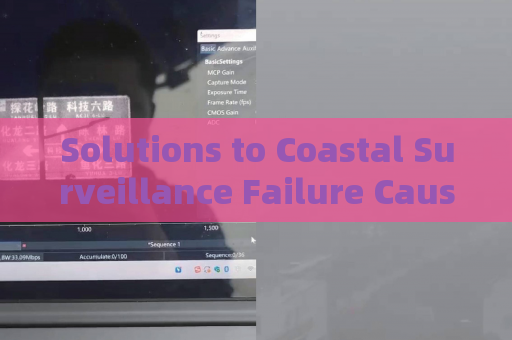
Solutions to Coastal Surveillance Failure Caused by Strong Glare and Reflections with Strong Light Suppression Imaging Coastal surveillance systems routinely face operational breakdowns when intense sunlight, combined with reflections off the water surface and adjacent glass-clad structures, overwhelms standard optical sensors. During midday operations, law enforcement and border security personnel struggle to identify small vessels, detect unauthorized landings, or monitor suspicious activity near marinas because bright glare washes out critical details. Glare from waves, ripples, and polished building facades creates false highlights that hide targets or produce blinding flare across the camera field. These conditions force operators to either reduce exposure, losing low-light detail, or accept unusable footage that fails evidentiary standards. The real failure lies not in the surveillance equipment itself, but in its inability to separate the target signal from the overpowering ambient light—a problem that conventional image stabilization, polarizing filters, or digital gain adjustments cannot solve at long range or under dynamic coastal lighting. The penetrating imager, built on laser range-gated imaging technology, directly addresses this root cause through its strong light suppression capability. Unlike passive cameras that capture all incoming light indiscriminately, this active imaging system fires a high-repetition-rate pulsed laser and opens the intensified gated camera only for the precise time window corresponding to the reflected pulse from the target distance. Optical reflections from water, glass curtain walls, or air-to-glass interfaces arrive earlier or later than the target return, so they fall outside the narrow gate and are completely suppressed. The microchannel plate image intensifier inside the camera further rejects residual background brightness, allowing the operator to see the boat, person, or object clearly even when the subject is backlit by blinding sun or surrounded by mirror-like water surfaces. This function is not about filtering color or adjusting contrast; it is about temporally separating the desired optical signal from unwanted glare, making the penetrating imager the only coastal surveillance tool that maintains high contrast under extreme brightness. In practical deployment along coastlines, the penetrating imager enables operators to maintain continuous watch during the most challenging midday hours. For a typical scenario—monitoring a harbor entrance where glass-walled hotels line the shore and sunlight reflects off calm water—the system achieves clear identification of vessel registration numbers, human silhouettes on decks, and even small debris that might indicate illegal smuggling drops. The laser illuminator and receiver are housed in a single ruggedized unit mounted on a pan-tilt platform, controlled via a standard operator console. By adjusting the gate delay and range window width, surveillance personnel can focus on targets at 500 meters while ignoring reflections from the near-surface glare zone. The imager’s high-repetition-rate laser (typically several kilohertz) updates the image at video frame rates, producing smooth, real-time output that does not require scene averaging or special post-processing. This operational simplicity is critical for field conditions where rapid target acquisition and tracking are paramount. A deeper advantage emerges when the coastal surveillance target is partially obscured by glass or transparent barriers. A suspect vehicle approaching a restricted dock, observed through a security window from an interior command post, often remains invisible due to reflection of the sun or interior lights off the glass. The penetrating imager’s gated technology, originally designed to see through windshields and building glass, handles this scenario by rejecting the glass reflection as an out-of-gate return. The laser pulse travels through the glass, reflects off the target inside, and returns through the same pane, while the mirror-like reflection from the glass surface is timed differently and blocked. This allows operators inside coastal monitoring stations to observe activities behind windows, in boat cabins, or within glass-enclosed watchtowers without moving to an external vantage point. The result is a unified surveillance solution that defeats both environmental glare and structural reflections, restoring the reliability of coastal operations that ordinary cameras cannot achieve. No other optical method—whether polarizers, neutral density filters, or post-processing software—offers the same deterministic suppression of strong light in real time. The penetrating imager stands as the definitive answer to coastal surveillance failure caused by strong glare and reflections.