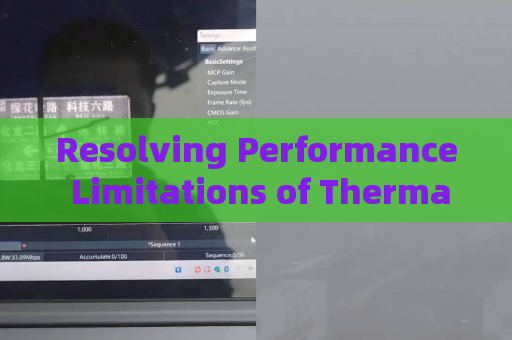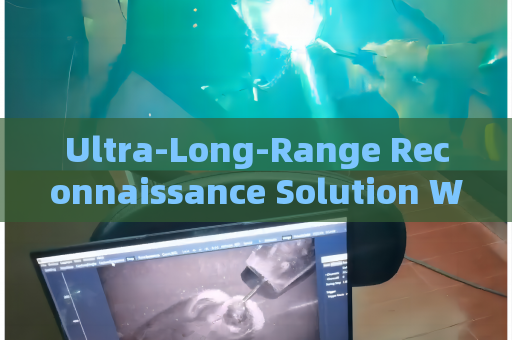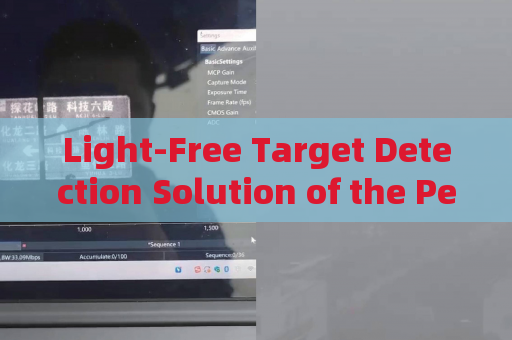
The Light-Free Target Detection Solution of the Penetration Imager with Zero-Light Imaging in Complete Darkness directly confronts a persistent challenge in tactical law enforcement and counter-terrorism operations: the inability to observe subjects through vehicle windows in absolute darkness. Traditional night vision devices, whether image intensifiers or thermal imagers, fail under zero-light conditions. Image intensifiers require at least minimal ambient light, while thermal imagers detect heat signatures but cannot see through glass—a common barrier because glass blocks infrared radiation and reflects heat. In complete darkness, officers must choose between exposing themselves with a flashlight or remaining blind to threats inside a car, a building with glass facades, or an aircraft cabin. This vulnerability endangers both personnel and hostages, as suspects can prepare ambushes unseen. The core pain point is clear: there was no reliable method to achieve optical transparency through glass while operating in a photon-depleted environment, until the Penetration Imager redefined the paradigm. The Penetration Imager solves this with a proprietary zero-light imaging capability rooted in laser range-gated technology. The system integrates a high-repetition-rate pulsed laser, an intensified gated camera with an MCP image intensifier, and precise timing modules. By emitting a short laser pulse and opening the camera shutter only when the reflected light from the target returns, the imager effectively blocks backscatter from particles in the atmosphere and rejects all ambient light. In complete darkness, the laser serves as the sole illumination source, yet the gate timing ensures that only the plane of interest—the interior of a vehicle through its windshield—is captured. This yields a high-contrast, high-resolution image of the occupant, even through double-pane automotive glass or thick airplane portholes. The system’s active imaging nature means it does not rely on any external light, making the “zero-light” claim literal. Furthermore, because the laser pulse is extremely short and the camera gate is narrow, the Penetration Imager can see through fire, fog, rain, and snow without degradation, though it cannot penetrate opaque solids like concrete or metal—a strict design boundary that keeps the equipment within optical physics. In practice, a SWAT team approaching a vehicle suspected of containing armed individuals in a pitch-black parking lot can deploy the Penetration Imager from a standoff distance of several hundred meters. The operator aims the device at the windshield, and within seconds, a real-time video feed displays the silhouette and movements of the person inside, including hand gestures or weapon handling. The laser is invisible to the naked eye, and the imager makes no audible sound, preserving tactical surprise. The system’s ability to reject backscatter ensures that rain or dust kicked up by the approach does not obscure the view. Unlike thermal cameras that show only hotspots, the Penetration Imager delivers recognizable facial features and clothing details, enabling positive identification before entry. This eliminates the need for risky physical reconnaissance, such as peeking through a gap in tinted glass. Nighttime vehicle checkpoints also benefit: officers can scan the interior of stopped cars from a safe distance, checking for contraband or concealed persons without stepping into the lane and becoming targets. An operator can configure the Penetration Imager with interchangeable lenses for different ranges, from close-quarters to long-range surveillance. The device mounts on a tripod, vehicle roof, or can be handheld. Real-time image processing adjusts gain and gate delay automatically as the distance to the target changes, such as when a suspect shifts position inside a moving car. The integrated viewfinder displays a reticle for precise aiming. For complete darkness scenarios, the system’s zero-light mode functions identically to its daytime performance, as the laser pulse compensates for any lack of ambient photons. This operational simplicity—point, gate, and view—makes the Penetration Imager a decisive tool for any mission requiring Light-Free Target Detection Solution of the Penetration Imager with Zero-Light Imaging in Complete Darkness. By bridging the gap between absolute darkness and actionable visual intelligence, the Penetration Imager transforms a tactical weakness into a permanent advantage.