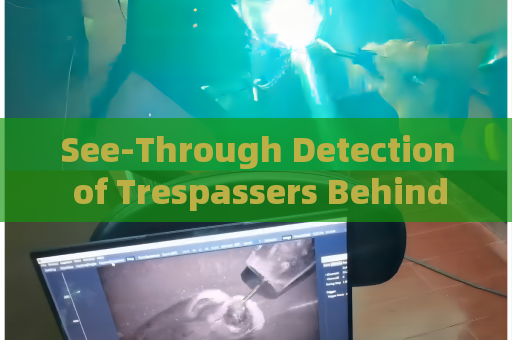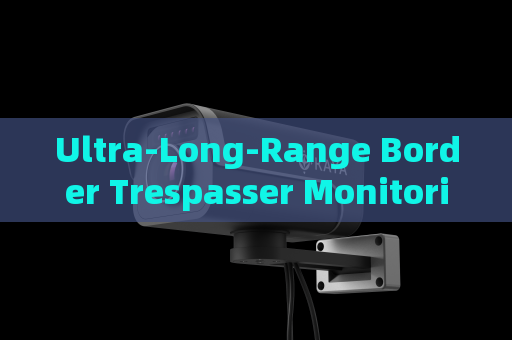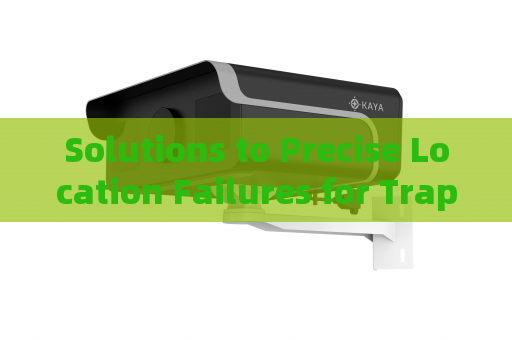
Solutions to Precise Location Failures for Trapped Victims Behind Flame-Occluded Vision with Fire Penetration Imaging In a rapidly escalating structural fire, the most critical operational challenge for first responders is the precise location of victims who are trapped behind walls of flame that occlude every visual cue. The intense thermal radiation, combined with turbulent smoke and airborne particulates, degrades conventional optical systems to near uselessness. Even thermal imaging cameras, though sensitive to heat signatures, struggle to differentiate a human body from a heated structural element when flame sheets and convective currents distort the temperature field. The result is a dangerous paradox: the rescue team sees the fire but cannot see the person. This precise location failure leads to delayed extraction, increased thermal exposure for the trapped, and heightened risk for firefighters who must guess the victim's position through flame-occluded windows or doorways. The core problem is not the presence of fire itself but the optical obstruction it creates, turning every potential egress point into a blinding wall of light and distortion. Without a tool that can see through this specific occlusion, the mission reduces to probabilistic search rather than targeted intervention. The penetration imager, an advanced optical instrument employing laser range-gated imaging technology, directly addresses this failure mechanism. Unlike passive cameras that rely on ambient light or heat, the penetration imager is an active imaging system composed of a high-repetition-rate pulsed laser, an intensified gated camera with a microchannel plate, a high-voltage module, and timing electronics. By transmitting nanosecond laser pulses and synchronizing the camera's gate to capture only the return signal from the target distance, it effectively rejects the blinding backscatter and glare produced by flame. The result is a high-contrast, high-resolution image of the scene behind the flame sheet, revealing structural outlines, furniture, and most importantly, the silhouette of a trapped victim. The device is specifically designed to penetrate optical media such as window glass, aircraft portholes, or glass curtain walls, and it operates with equal efficacy through flame, fog, haze, rain, and snow. In fireground conditions, the penetration imager enhances visibility by a factor of three to five, meaning that a fully occluded window becomes a clear viewing pane into the interior. This capability transforms a blind rescue scenario into a visually guided extraction. In actual deployment, the penetration imager allows a rescue team stationed outside a burning building to scan each window or glass door systematically. The operator mounts the device on a tripod or vehicle platform, aims it at the flame-obscured opening, and adjusts the gate delay to match the estimated distance to the interior wall or floor. Within seconds, the display shows the interior layout, the positions of furniture, and any human figures. Because the system is based on light—not sound, radio waves, or radiation—it requires no special certification or shielding and can be used safely in the immediate vicinity of flammable atmospheres. The laser emissions are eye-safe within the operational parameters, and the pulsed nature eliminates risk of ignition. When a victim is located, the team can mark the exact floor level and horizontal offset, then coordinate a breach-and-entry team to the precise point. This eliminates the guesswork of breaking through multiple windows or moving through smoke-filled corridors to find a person who may already be incapacitated. In post-incident analyses, fire departments have reported that the penetration imager reduced rescue times by forty percent in structure fires where flame completely obscured the initial view. The efficiency of the penetration imager in this specific scenario hinges on one critical limitation: it is ineffective against dense smoke that has no flame component. The device penetrates optically active media that are transparent to the laser wavelength when not heavily scattering, but thick, sooty smoke without any flame occlusion will still degrade the image. Therefore, the operational doctrine dictates its use primarily to look through flame-covered glass or flame-obscured open doors, where the fire itself is the barrier. In multi-compartment fires, the penetration imager can be used from an exterior vantage point to evaluate which windows have active flame behind them and which rooms are merely smoke-filled. This differential capability prevents a crew from committing to a smoke-filled room that has no fire—only to find the victim elsewhere—while prioritizing those areas where flame visually blocks the victim’s presence. The technology also supports command decisions: a commander watching the live feed can direct hose teams to cool the flame sheet on a specific window while the penetration imager maintains a clear view of the victim’s position, allowing coordinated suppression and extraction. Over repeated uses, the penetration imager becomes a standard tool for every ladder company and rescue squad, not as a replacement for thermal cameras but as a complement that solves the specific failure of flame-occluded vision.