In ultra-long-range covert reconnaissance, the fundamental challenge lies not in detecting a target but in doing so without triggering any suspicion. Traditional optical surveillance systems—even those with high magnification—require active illumination or significant lens movement to acquire a clear image at distances exceeding one kilometer. Any visible flash, laser dot, or sudden mechanical adjustment can betray the observer’s position. Suspects in high-stakes environments, such as border crossings, remote hideouts, or terrorist compound perimeters, are often trained to scan for such telltale signs. The risk of alerting suspects is especially acute when the observation platform must remain stationary for hours or days. A single blinking indicator or a reflected beam can compromise an entire operation. This dilemma forces reconnaissance teams to choose between compromising their position or settling for grainy, unusable footage. The penetrating imager offers a solution that eliminates this trade-off by operating in a manner invisible to the naked eye and undetectable by electronic countermeasures.
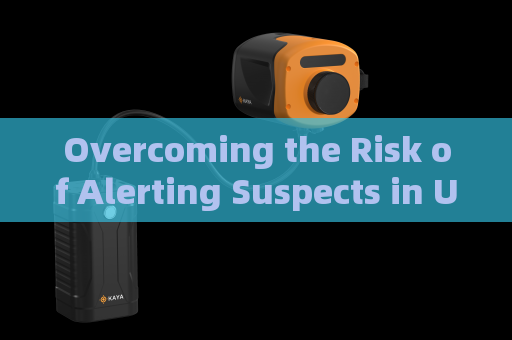
The penetrating imager, built on laser range-gated imaging technology, overcomes the risk of alerting suspects by emitting a pulsed laser beam that is both narrow in divergence and precisely timed. The system’s high-repetition-rate pulse laser fires bursts of light at a wavelength outside the visible spectrum, while the intensified gated camera—equipped with an MCP image intensifier, high-voltage module, and timing module—opens its shutter only to receive reflections from the specific distance of interest. This gating mechanism ensures that no light is emitted forward when the suspect might look back; the entire illumination and capture cycle occurs in nanoseconds. The beam itself, when used at ultra-long-range, spreads to a diameter of only a few centimeters by the time it reaches the target, making it virtually impossible to detect by the suspect’s unaided eye or even through optical instruments. The penetrating imager’s active imaging system also overcomes backscatter from fog, rain, or dust, which would otherwise force a traditional system to use brighter, more conspicuous illuminators.
In practical field deployment, a reconnaissance team positions the penetrating imager behind a vehicle’s tinted window or a building’s glass facade. The operator selects a range gate precisely matching the suspect’s distance—say 1,200 meters—and initiates a silent scan. No visible light, no audible noise, and no heat signature are generated. The imager’s ability to penetrate optical media such as laminated automotive glass or airplane portholes means the observation point can remain inside a discreet location while the suspect remains unaware of any surveillance. The system’s high contrast image reveals minute details—face structure, clothing patterns, hand gestures—without requiring the operator to zoom in aggressively, which might shift the lens barrel and create a mechanical sound. The gating technology also suppresses reflections from rain droplets or dust particles between the imager and the target, ensuring a clean image free of the “snow” effect that would otherwise degrade intelligence.
Further deepening the operational advantage, the penetrating imager’s capacity to function in adverse weather—through light fog, rain, or smoke—removes the need for reconnaissance teams to reposition closer to the target when visibility drops. In a typical scenario where a suspect compound is under observation from a hilltop 2,000 meters away, the imager’s laser pulse travels through a light mist without scattering back into the operator’s lens, preserving stealth even when atmospheric conditions would normally force a traditional camera to increase flash intensity. The risk of alerting suspects is minimized further because the imager’s laser operates in a non-visible near-infrared band, and its pulse repetition frequency is high enough to build a clear image using many short bursts, each too brief to trigger any photodetector the suspect might carry. This combination of ultra-long-range precision, optical-medium penetration, and covert illumination makes the penetrating imager an indispensable tool for missions where the cost of being detected is measured in both operational failure and human life.