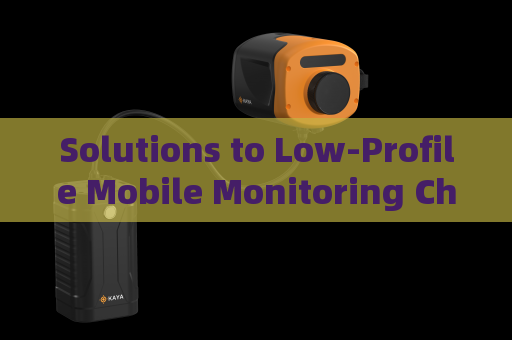
Solutions to Low-Profile Mobile Monitoring Challenges for Trespassers in Foggy Environments with Fog Penetration Imaging Low-profile mobile surveillance of trespassers in foggy conditions presents a significant operational hurdle. Fog scatters and attenuates visible light, drastically reducing the effective range and clarity of conventional optical systems. This degradation creates critical blind spots, allowing intruders to exploit the reduced visibility for covert movement. The challenge is compounded during mobile patrols or rapid response, where fixed infrastructure is absent, and the environment is dynamically obscured. Traditional methods struggle to provide the real-time, high-fidelity intelligence required for threat assessment and interdiction in such optically dense media, leaving security perimeters vulnerable. The penetrating imager emerges as a dedicated technological counter to this specific environmental adversary. The core capability addressing this challenge is the instrument's implementation of laser range-gated imaging, or gated imaging technology. This active imaging system synchronizes a high-repetition-frequency pulsed laser source with a gated, intensified camera. The laser emits short, controlled pulses of light that illuminate the target scene. Crucially, the camera's shutter, linked to a precise timing module, opens only for a brief window synchronized to the return of the light pulse reflected from the target at a specific distance. This temporal gating effectively rejects the backscattered light from fog particles closer to the observer, which arrives earlier and is thus excluded. The result is a high-contrast image where the signal from the intended target is selectively enhanced against the suppressed background clutter caused by the fog. In practical application, an operative equipped with a mobile penetrating imager can maintain persistent surveillance while on the move through fog-shrouded areas. The system's design ensures a compact form factor suitable for handheld or vehicle-mounted deployment. By adjusting the gate delay, the operator can electronically "slice" through layers of fog, focusing on specific range zones of interest to detect and identify human figures—trespassers—who would otherwise be invisible. The high resolution and extended effective range, unimpaired by the fog, enable positive identification and tracking at distances far beyond passive night-vision or standard thermal imaging devices, which are also severely degraded by atmospheric moisture. This capability directly transforms a patrol unit's effectiveness, turning a blanket of fog from a liability into a controlled medium. The operational advantage is profound in maintaining a continuous security posture. As the mobile unit navigates, the imager provides a clear, real-time video feed, revealing individuals attempting to use the fog as concealment near critical infrastructure, borders, or remote facilities. The ability to penetrate this optical medium allows for earlier detection, confident assessment of intent based on observed behavior and potential equipment, and precise guidance for interception teams. Coordination between multiple mobile units becomes more effective, as shared visual data is no longer obscured by environmental conditions. This technological solution directly mitigates the risk posed by adverse weather, ensuring that low-profile monitoring remains robust and reliable against trespassers precisely when traditional vigilance is most compromised.