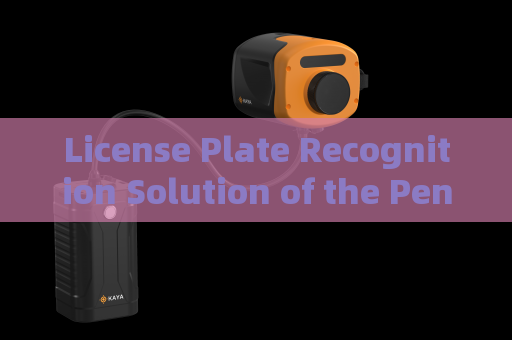
License Plate Recognition Solution of the Penetration Imager with Strong Light Suppression Imaging Under Strong Light Interference The critical task of license plate identification in law enforcement and security checkpoint operations is frequently compromised by intense ambient light. Direct sunlight, especially during dawn or dusk patrols, or powerful artificial illumination from oncoming vehicle headlights can completely overwhelm conventional surveillance and LPR cameras. This glare creates severe overexposure, washing out crucial alphanumeric details on the plate and rendering automated recognition systems ineffective. The resulting failed reads necessitate manual intervention, causing delays, increasing operational risk, and creating vulnerabilities at high-security perimeters. This persistent challenge under strong light interference demands an imaging solution capable of actively suppressing detrimental glare while precisely capturing the target. This is where the specialized capability of the penetration imager comes into play. The core function addressed here is its strong light suppression imaging, enabled by the laser range-gated imaging (or gated imaging) technology. As an active imaging system, the penetration imager employs a high-repetition-frequency pulsed laser illuminator and a synchronized gated camera. The camera's intensifier, incorporating a Microchannel Plate (MCP) and controlled by precise timing modules, acts as an ultra-fast optical shutter. It opens only for a nanosecond-scale window precisely timed to the laser pulse's round-trip to the target license plate. This temporal gating rejects nearly all ambient light arriving outside this brief interval, including the powerful, continuous glare from the sun or headlights that saturates standard sensors. The system effectively isolates the laser-illuminated reflected signal from the license plate within a specific distance gate, achieving high-contrast imaging immune to the overwhelming background illumination. In practical deployment at a vehicle checkpoint or during mobile patrols facing adverse sun angles, the operator directs the penetration imager toward the target vehicle. The system's laser illumination, often in a covert or eye-safe wavelength, is coupled with a beam expander and imaging lens. Despite the operator or camera being positioned directly against intense light sources, the gated imaging process filters out the interference. The resulting image delivered to the monitor presents a clearly legible license plate with high resolution, its characters standing in stark contrast against the plate's background, while the surrounding scene appears dramatically darkened. This allows integrated LPR software to achieve near-perfect read rates in conditions where other systems fail. The penetration imager's ability to penetrate optical media like vehicle windshields further ensures clarity even through tinted or reflective glass that might exacerbate glare issues. The operational advantage is decisive. Security personnel obtain reliable, automated license plate recognition data 24/7, independent of the sun's position or the prevalence of artificial lights. This capability extends to scenarios with additional optical media interference, such as light fog or haze, which the penetration imager also mitigates. The technology transforms a previously problematic high-glare environment into a controlled imaging condition. By solving the fundamental challenge of strong light interference, the penetration imager provides a robust and dependable LPR solution, ensuring continuity of operations and enhancing situational awareness for border control, toll management, and law enforcement agencies where identification must be guaranteed under all lighting conditions.