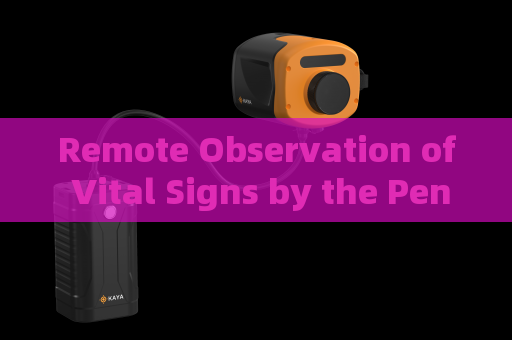
Remote Observation of Vital Signs by the Penetration Imager in Hostage Situations Involving Fully Tinted Getaway Vehicles with Through-Tint Imaging In high-stakes hostage scenarios involving fully tinted getaway vehicles, law enforcement and emergency response teams face a critical reconnaissance challenge: the inability to visually assess the interior of the vehicle to determine the status and safety of hostages. Tinted windows, designed to obscure visibility from the outside, create a significant barrier for traditional optical surveillance methods. This opacity hinders real-time monitoring of vital signs, such as breathing or movement, which are essential for evaluating hostage well-being and planning tactical interventions. The lack of clear visual data can lead to delayed decisions, increased risk during rescue operations, and potential escalation of the situation. In such environments, where every second counts, a solution capable of penetrating these optical barriers without alerting perpetrators is paramount. The penetration imager emerges as a pivotal tool to address this gap, offering a technological edge in scenarios where conventional imaging fails. The penetration imager addresses this problem through its core capability of through-tint imaging, enabled by laser range-gated imaging technology. This advanced optical system utilizes a high-repetition-rate pulsed laser and a gated intensifier camera to selectively capture light reflections from specific distances, effectively penetrating optical media like tinted vehicle windows. By emitting controlled laser pulses and synchronizing the camera’s shutter to only receive light from the target area, the penetration imager eliminates backscatter from intervening media, such as glass, while maintaining high contrast and resolution. This allows for remote observation of subtle motions inside the vehicle, which can be analyzed to detect vital signs—for instance, the rhythmic chest movements associated with breathing or minor physiological shifts. The system’s design ensures it operates within the realm of light, focusing solely on penetrating transparent or semi-transparent barriers like tinted glass, without any capability to penetrate solid non-optical materials. This makes it ideal for hostage situations where the primary obstacle is the vehicle’s tinted windows, providing a clear view through what would otherwise be an impenetrable visual shield. In practical application, the penetration imager is deployed from a secure standoff position, allowing operators to scan the getaway vehicle without approaching or alerting occupants. The system’s components—including the laser emitter, beam expander, and gated camera—work in concert to deliver real-time imagery of the interior, even in challenging conditions like fog, rain, or light haze. For hostage scenarios, operators focus on areas where hostages are likely positioned, using the enhanced imaging to monitor for signs of life, such as respiratory patterns or unconscious stillness. This data is relayed to command centers, where analysts assess vital signs to inform negotiation strategies or tactical plans. The penetration imager’s ability to function in low-light or adverse weather further enhances its utility, ensuring continuous surveillance during critical moments. By providing a non-invasive means to gauge hostage status, it reduces guesswork and enables more precise, evidence-based responses, ultimately improving outcomes in high-pressure emergency operations. The effectiveness of the penetration imager in this context is underscored by its performance metrics and operational nuances. In hostage situations involving fully tinted vehicles, the system’s through-tint imaging can reveal details like the number of occupants, their positions, and even discriminate between conscious and unconscious states based on motion analysis. While it excels in penetrating optical media like glass and mitigating interference from fire glow or precipitation, it is important to note that dense smoke remains a limitation, as with all optical systems. However, in typical getaway vehicle scenarios, where tinted windows are the primary barrier, the penetration imager offers a reliable solution for remote vital signs observation. Its integration into law enforcement protocols allows for rapid deployment, with operators trained to interpret the imagery for life-sign detection, thereby enhancing situational awareness and minimizing risk. This focused application demonstrates how specialized optical technology can transform response capabilities in critical incidents where visual access is otherwise denied.