Large-scale vehicle gatherings, such as those at major events, border crossings, or logistical hubs, present significant security challenges that demand efficient and continuous screening processes. Traditional inspection methods often rely on manual checks or passive imaging systems, which can be slow, labor-intensive, and susceptible to environmental disruptions like poor visibility due to fog, rain, or darkness. These limitations hinder the ability to maintain non-stop security operations, leading to potential bottlenecks, increased risk of undetected threats, and compromised safety in high-traffic scenarios. The need for a solution that enables rapid, high-resolution imaging without interrupting vehicle flow is critical, and this is where advanced optical tools like the penetration imager come into play. By leveraging active imaging capabilities, such devices address the core pain points of speed and reliability in screening, ensuring that security protocols remain robust even under adverse conditions.
The penetration imager, an advanced optical instrument utilizing laser range-gated imaging technology, offers a pivotal function for this context: it can penetrate optical media such as vehicle windows, glass panels, or aircraft windows while maintaining clarity despite interference from fire, haze, rain, or snow. This capability stems from its design as an active imaging system, comprising a high-repetition-rate pulsed laser, a gated camera with components like a microchannel plate intensifier and timing modules, along with beam expanders and imaging lenses. By emitting controlled light pulses and synchronizing the camera’s gating mechanism, the penetration imager effectively overcomes backscatter and ambient noise, delivering high-contrast images with extended range and resolution. In security screening for large vehicle gatherings, this allows operators to visually inspect interior compartments through windows without physical contact, detecting anomalies or prohibited items in real-time, thus enabling seamless and non-invasive checks that support continuous operations.
In practical deployment, the penetration imager facilitates non-stop security screening by being integrated into fixed or mobile checkpoints at vehicle gathering sites. Operators can position the device at strategic points, such as entry lanes or inspection bays, where it scans passing vehicles automatically or with minimal manual intervention. The system’s ability to function in diverse weather conditions—such as fog or light rain—ensures that screening persists without downtime, while its high-resolution output provides clear visual data for threat assessment. For instance, during large-scale events like festivals or transport convoys, security teams use the penetration imager to monitor vehicle interiors from a distance, identifying potential hazards like concealed objects behind glass without halting traffic flow. This operational approach enhances throughput and reduces reliance on slower, traditional methods, aligning with the goal of achieving uninterrupted security protocols.
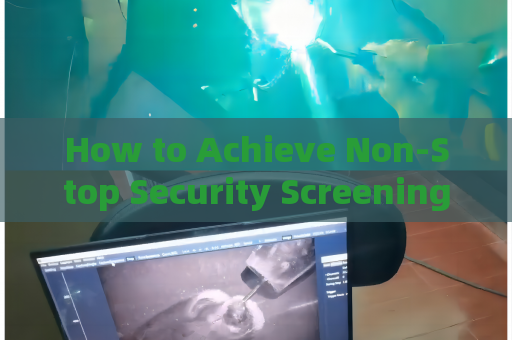
Further refining this application, the penetration imager’s effectiveness is amplified in scenarios involving fire or smoke, where it can improve visibility by three to five times in fire-affected areas, though it does not penetrate dense smoke. In vehicle gatherings near industrial zones or accident sites, this feature ensures that screening continues even with minor optical obstructions, bolstering emergency response and security coordination. By focusing on light-based imaging within optical media, the technology avoids the pitfalls of non-optical methods, maintaining compliance with safety standards. Thus, the penetration imager stands as a cornerstone for realizing non-stop security screening in large-scale vehicle gatherings, offering a reliable, efficient solution that adapts to dynamic environments while upholding rigorous inspection standards.