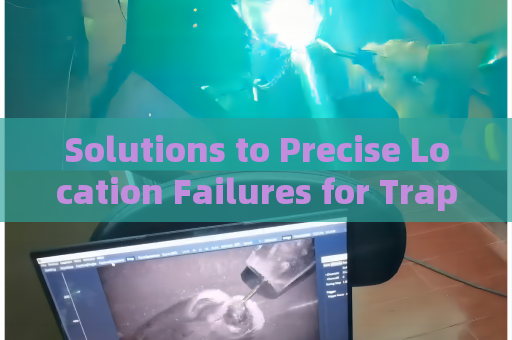
Solutions to Precise Location Failures for Trapped Victims Behind Flame-Occluded Vision with Fire Penetration Imaging In structural firefighting and urban search and rescue operations, a critical and persistent challenge is the failure to precisely locate trapped victims when direct visual assessment is obstructed by intense flames. Dense, dynamic fire fronts act as a luminous curtain, scattering and overwhelming visible light, rendering conventional camera systems and human vision ineffective. This flame-occluded vision creates a dangerous operational gap, delaying victim extraction and forcing responders to make risky, time-consuming advances based on inference rather than confirmed visual intelligence. The inability to see through this optical barrier directly compromises mission success and survival rates, making the search for viable technological solutions to precise location failures for trapped victims behind flame-occluded vision a paramount priority for first responders. The core technological answer lies in a specialized active imaging system known as a fire penetration imaging device, or specifically, a penetration imager. This instrument is fundamentally designed to overcome the blinding glare of flames by employing laser range-gated imaging technology. The system integrates a high-repetition-rate pulsed laser illuminator and a synchronized, gated intensified camera. Its pivotal function is temporal discrimination: the laser emits a short, powerful pulse of light, and the camera’s sensor opens its electronic shutter for an equally brief moment, timed precisely to capture only the light reflected from objects at a specific pre-set distance. This gating mechanism effectively rejects the vast majority of light scattered by the flame particles and thermal plumes closer to the device, which arrive at different times. Consequently, the penetration imager suppresses the diffuse, overpowering glow of the fire, revealing the high-contrast silhouette of the scene and any potential victim behind the flame front. Deployed at a fire scene, a responder operates the penetration imager by systematically scanning through the flames from a standoff position. The operator adjusts the range gate to correspond with the distance of the room or corridor obscured by fire. Through the viewfinder or connected display, the chaotic blaze transforms into a discernible, darker background against which structural details and human forms emerge with clarity. This allows for rapid confirmation of victim presence, posture, and precise coordinates within the compartment before committing to an interior attack. The capability to visually penetrate optical disturbances like flames, fog, or light rain enables command to formulate a targeted rescue plan, optimizing resource deployment and enhancing firefighter safety by minimizing blind exposure. The operational efficacy of this penetration imager hinges on understanding its precise functional boundary within the fiery environment. While it dramatically improves visibility through the luminous interference of flames, boosting effective visual range by three to fivefold, its performance is intrinsically linked to the optical properties of the medium. It cannot penetrate thick, opaque smoke, as smoke particles absorb and block the laser light entirely. Therefore, its application is most potent in scenarios where the primary visual obstruction is the flame itself, perhaps in conjunction with other transparent or semi-transparent barriers like windows. This defines a crucial niche: providing life-saving visual intelligence precisely where other sensors fail, directly addressing the grave problem of precise location failures for trapped victims behind flame-occluded vision with fire penetration imaging.