In law enforcement and border surveillance operations, severe weather conditions such as heavy rain, snow, fog, or smoke from fires present a formidable challenge. These atmospheric obscurants significantly degrade the effectiveness of conventional optical and thermal surveillance systems, creating a critical blind spot. Suspicious activities, including illicit border crossings, unauthorized vehicular movements, or coordination near critical infrastructure, can be deliberately orchestrated under this cover. The inability to maintain continuous, clear visual intelligence during such conditions represents a major operational vulnerability, allowing threats to maneuver undetected and escalating security risks. Traditional imaging often fails to distinguish the target from the weather-induced noise, leading directly to target detection failures when suspicious activities are concealed by severe weather.
The penetrating imager, specifically designed to counter this limitation, employs laser range-gated imaging technology. This active imaging system projects precisely timed, high-frequency pulses of laser light. Its core component, a gated intensifier camera synchronized with the laser pulses, only opens its shutter for the exact moment when light reflected from the distant target returns. This sophisticated temporal gating effectively rejects the overwhelming backscatter from precipitation, fog, or mist particles suspended in the air between the sensor and the target. Consequently, it isolates the useful signal from the target itself, achieving high-contrast imaging. This functional principle allows the penetrating imager to see through various optical media disturbances, maintaining clarity and resolution where passive systems are blinded.
Operationally, the penetrating imager transforms surveillance capabilities during adverse conditions. In persistent rain or snowfall, the system can maintain observation of stationary or slowly moving vehicles, allowing operators to discern occupant numbers and basic activities through standard automotive glass, a transparent optical medium. At a secure perimeter during a wildfire, while thick smoke remains an obstacle, the imager can enhance visibility through the airborne particulates and heat haze by a factor of three to five, aiding in monitoring the perimeter for potential exploitation of the chaos. The operator controls the laser pulse timing and gate width to adapt to varying ranges and weather intensities, optimizing the image clarity for specific reconnaissance tasks against concealed activities.
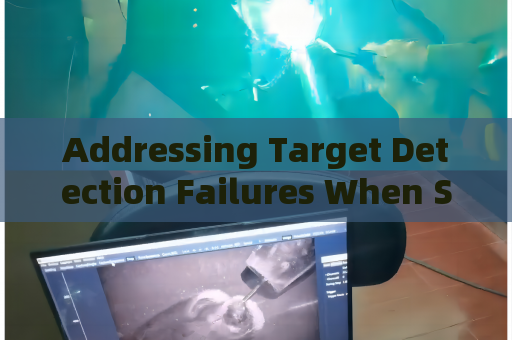
The application extends to verifying activities behind other transparent barriers often encountered in such scenarios. Whether observing through the window of a train carriage halted in a blizzard or the glass facade of a building near a deliberately set obscuring fire, the penetrating imager provides critical visual intelligence. It delivers actionable information on potential threats attempting to use the weather as a shield, directly addressing the core failure mode in all-weather surveillance. The technology’s value lies in its specific, physics-based solution to an optical problem, restoring the surveillance picture when it is most needed and most commonly lost. This focused capability makes the penetrating imager an indispensable tool for modern security forces facing the deliberate concealment of activities by severe weather.