Nighttime covert vehicle surveillance operations face a critical challenge: the inherent risk of exposure that compromises mission success and personnel safety. Traditional surveillance methods, such as visible-light cameras or thermal imaging, often require proximity to the target vehicle or the emission of detectable signals, increasing the likelihood of detection by suspects. In low-light conditions, these techniques may struggle with poor visibility due to environmental factors like fog, haze, or rain, forcing operatives to move closer and amplify their footprint. The need to observe through obstacles like tinted vehicle windows further complicates efforts, as conventional tools cannot penetrate such optical media without revealing the surveillants' presence. This persistent vulnerability underscores the urgency for advanced solutions that enable remote, discreet monitoring without compromising image clarity. The penetration imager emerges as a pivotal technology in addressing these operational gaps, offering a stealthy approach to overcoming exposure risks in nocturnal scenarios.
The penetration imager leverages laser range-gated imaging technology to solve the core problem of exposure during nighttime covert vehicle surveillance. This active imaging system employs a high-repetition-rate pulsed laser and a gated intensifier camera, which includes components like a microchannel plate intensifier, high-voltage module, and timing circuitry. By synchronizing laser pulses with the camera's gating mechanism, the system selectively captures light reflected from the target while suppressing backscatter from intervening optical media. This allows it to penetrate vehicle windows, glass surfaces, and other transparent barriers with high contrast and resolution. Crucially, the penetration imager operates without emitting visible light, making it undetectable to the naked eye and thus minimizing the risk of alerting targets. Its ability to function effectively through fog, mist, rain, or snow ensures reliable performance in diverse nighttime environments, directly mitigating the exposure hazards associated with traditional surveillance methods.
In practical application, the penetration imager transforms nighttime covert vehicle surveillance by enabling operatives to conduct remote observations from concealed positions. Deployed at a safe distance, the system can capture detailed images of a vehicle's interior through the windshield or side windows, even if they are tinted or obscured by weather conditions. Operators utilize the imager's components—such as the beam expander and imaging lens—to adjust focus and range, achieving clear visuals without approaching the target. This capability allows for continuous monitoring of activities inside parked or moving vehicles, providing critical intelligence while keeping personnel hidden. Field reports indicate that the penetration imager enhances operational stealth by eliminating the need for intrusive lighting or close-quarters maneuvers, thereby reducing the probability of compromise. Its high-resolution output facilitates identification of occupants or objects, supporting evidence gathering in law enforcement or emergency response contexts.
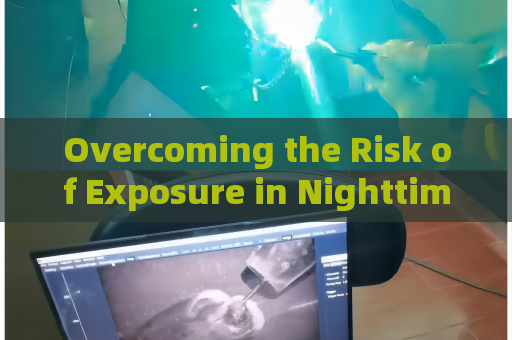
The effectiveness of the penetration imager in nighttime covert vehicle surveillance is further highlighted by its adaptability to complex scenarios. For instance, in urban settings with light pollution or reflective surfaces, the system's anti-interference features maintain image integrity by filtering out ambient noise. When deployed alongside other surveillance assets, the penetration imager can be integrated into a networked setup for real-time data fusion, enhancing situational awareness without increasing exposure risks. Its performance in fire-affected areas, where it boosts visibility by three to five times through flames and optical obstructions, demonstrates versatility—though it remains ineffective against dense smoke. By focusing solely on optical penetration, this technology adheres to its functional boundaries, avoiding any capability to penetrate non-transparent solids like walls or metals. Thus, the penetration imager stands as a specialized tool that redefines covert operations, ensuring that nighttime vehicle surveillance proceeds with minimal risk and maximum discretion.