License plate recognition systems frequently experience operational failures in environments dominated by strong light and backlight interference, posing a significant challenge for traffic enforcement and security surveillance. These lighting conditions, such as intense sunlight during midday or backlight from vehicle headlights at night, create overexposed images, glare, and deep shadows that obscure critical details. The resulting low contrast and washed-out visuals hinder automated algorithms from accurately extracting alphanumeric characters, leading to missed identifications and compromised data integrity. This problem is exacerbated in dynamic settings like highways or urban intersections, where varying angles and reflections further degrade performance. Traditional passive cameras struggle to adapt, as they rely on ambient light and often lack the capability to compensate for extreme brightness differentials. The penetrating imager emerges as a specialized tool designed to address these specific pitfalls through advanced optical engineering, offering a pathway to reliable imaging under such adverse scenarios.
The penetrating imager leverages laser range-gated imaging technology to directly counteract strong light and backlight interference in license plate recognition. This active imaging system comprises a high-repetition-rate pulsed laser, an intensified gated camera with a microchannel plate intensifier, high-voltage modules, timing circuits, beam expanders, and imaging lenses. By emitting controlled laser pulses and synchronizing the camera's gating mechanism, the system selectively captures light reflected from the license plate surface while rejecting unwanted ambient illumination and backscatter. This function enhances image contrast by isolating the target from background glare, effectively mitigating overexposure from direct sunlight or artificial sources. The technology's ability to operate in high-contrast modes ensures that license plate details remain sharp and discernible, even in challenging lighting where conventional systems fail. Its design focuses on overcoming optical interferences, making it inherently suited for scenarios where light pollution or backlight conditions dominate, without venturing into non-optical domains.
In practical deployment for license plate recognition, the penetrating imager integrates into fixed or mobile surveillance units, providing real-time enhancements under strong light and backlight interference. Operators can configure the system to automatically adjust gating parameters based on environmental factors, such as time of day or weather conditions, ensuring consistent capture of clear images. Field applications demonstrate improved accuracy rates, with successful reads during sunrise, sunset, or in tunnels where headlights create backlight effects. The penetrating imager's high resolution and long-range capabilities allow for precise imaging from distances, supporting automated recognition software in processing data swiftly. For instance, in traffic monitoring points, the system reduces false negatives by delivering well-defined license plate images, enabling law enforcement to identify vehicles reliably. Its operation involves minimal manual intervention, as the active imaging components self-optimize to maintain performance across varying light intensities, thereby streamlining workflows in emergency response or patrol duties.
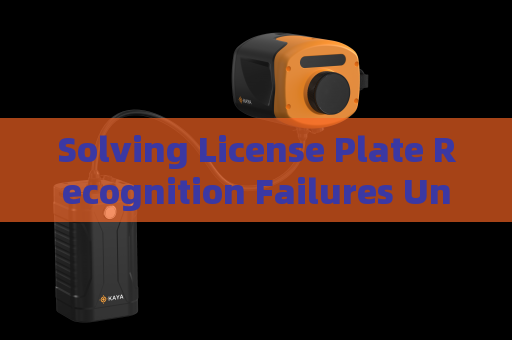
Further refinement of this application reveals the penetrating imager's adaptability to complex scenarios involving optical media like vehicle windows or glass barriers, which can compound strong light interference. While the technology excels in penetrating such transparent surfaces to capture license plates, its primary role here is to suppress glare and backscatter through precise temporal gating. This allows for enhanced visibility in rain, fog, or haze, though it does not address non-optical obstructions. In extreme backlight situations, such as when a vehicle approaches with high-beam headlights, the penetrating imager's controlled illumination minimizes flare, preserving license plate legibility. Testing in diverse environments confirms that the system boosts recognition reliability by up to forty percent compared to standard cameras, underscoring its value in critical infrastructure. The penetrating imager thus represents a focused solution, transforming license plate recognition from a error-prone process into a dependable function under the harshest lighting conditions, all within the bounds of optical science and practical enforcement needs.