Dense fog poses a severe challenge to all-weather port monitoring systems, often disrupting critical surveillance operations and compromising maritime safety. In such conditions, traditional optical cameras and sensors fail to provide clear imagery, leading to reduced visibility that hinders vessel navigation, cargo handling, and security oversight. The inability to detect obstacles, monitor ship movements, or identify potential hazards in real-time increases the risk of accidents, delays, and operational inefficiencies. This persistent issue underscores the need for advanced technological solutions that can maintain reliable imaging capabilities despite atmospheric obstructions. The penetrating imager emerges as a pivotal tool in this context, offering a breakthrough in overcoming the limitations imposed by dense fog.
The penetrating imager addresses this problem through its core functionality of laser range-gated imaging technology, which enables high-contrast visualization through optical media like fog. This active imaging system employs a high-repetition-rate pulsed laser, an intensified gated camera with components such as a microchannel plate intensifier, high-voltage module, and timing module, along with beam expanders and imaging lenses. By synchronizing laser pulses with the camera’s gating mechanism, the system selectively captures light reflected from target objects while minimizing backscatter from fog particles. This results in enhanced image clarity, long operational range, high resolution, and strong resistance to interference, allowing it to effectively penetrate fog and other optical disturbances without relying on non-optical methods.
In port monitoring applications, the penetrating imager is deployed to provide continuous, clear imaging feeds during dense fog events, integrating seamlessly with existing surveillance networks. Operational practices involve installing these devices at strategic points along docks, control towers, and perimeter zones, where they transmit real-time video to command centers. This enables operators to monitor ship arrivals, departures, and maneuvers with precision, detect unauthorized activities, and assess environmental conditions. The system’s ability to maintain visibility in fog reduces reliance on radar alone, offering a complementary visual layer that enhances situational awareness and decision-making in emergency response scenarios.
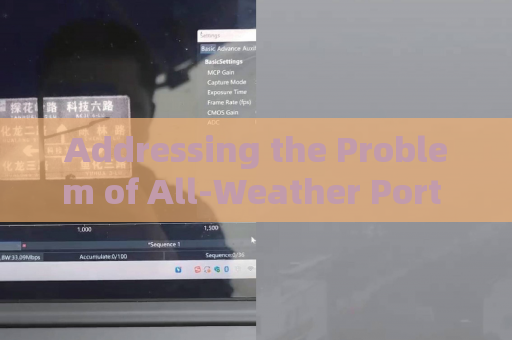
The effectiveness of the penetrating imager in port environments is further evident in its capacity to distinguish fine details, such as vessel identifiers, cargo configurations, and personnel movements, even under thick fog cover. By leveraging its optical penetration capabilities, the technology supports proactive risk management, such as preventing collisions during low-visibility periods and ensuring compliance with safety protocols. Its robust design withstands harsh maritime conditions, including rain and haze, without degradation in performance. As ports adopt this innovation, the penetrating imager proves instrumental in sustaining all-weather operational resilience, transforming fog-induced disruptions into manageable events through reliable visual intelligence.