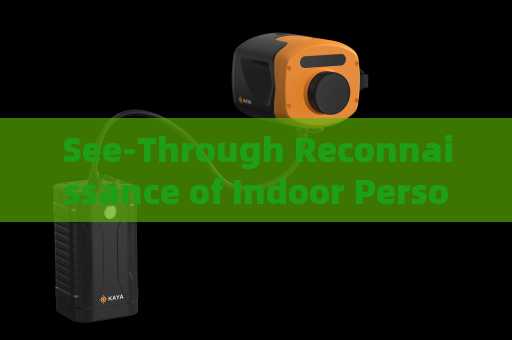
See-Through Reconnaissance of Indoor Personnel and Weapons by the Penetration Imager in Urban Narrow-Space Operations presents a critical challenge in modern tactical environments. Urban narrow-space operations, characterized by dense structures, confined streets, and complex interiors, demand precise intelligence on indoor personnel and weapon placements. Traditional visual侦察 methods often fail due to obstructions like windows, glass幕墙, or environmental hazards such as fire, fog, or haze. These optical barriers obscure direct line-of-sight, compromising situational awareness and increasing risks during high-stakes missions. The inability to peer through these media in real-time can lead to delayed decisions, operational盲点, and potential casualties, highlighting a pressing need for advanced imaging solutions that transcend conventional limitations. The penetration imager addresses this issue through its specialized capability to penetrate optical media using laser range-gated imaging technology. As an active imaging system, it comprises a high-repetition-rate pulse laser, an image-intensified gated camera with components like a micro-channel plate intensifier, high-voltage module, and timing module, along with beam expanders and imaging lenses. This configuration enables high-contrast imaging by effectively overcoming backscatter and interference from light-based obstructions. The penetration imager excels in see-through reconnaissance by allowing clear visualization through materials like vehicle windows, aircraft portholes, and glass幕墙, while maintaining resilience against火,雾,霾, rain, and snow. It does not penetrate non-transparent solids such as walls or metals, but focuses solely on optical domains, ensuring accurate and reliable data in urban narrow-space contexts where glass surfaces are prevalent. In practical application, the penetration imager enhances operational efficiency by providing real-time imagery of indoor personnel and weapons from external positions. Operators deploy the device in狭窄 urban settings, such as alleys or building perimeters, directing its laser pulses toward windows or glass facades. The gated camera synchronizes with the laser to capture reflected light only from the target distance, minimizing atmospheric clutter and yielding high-resolution images. This allows for discreet reconnaissance without physical entry, enabling teams to assess threats, monitor movements, and plan interventions with greater precision. For instance, in火场 scenarios, the penetration imager boosts visibility by three to five times, though它 remains ineffective against thick smoke, necessitating complementary tactics for comprehensive situational awareness. The effectiveness of see-through reconnaissance by the penetration imager is further evident in its integration with urban operational protocols. Training emphasizes calibration for varying optical conditions, such as adjusting laser intensity for different glass types or environmental interference. Field reports indicate reduced engagement times and improved accuracy in identifying weapons caches or hostile positions behind windows, contributing to safer and more decisive actions in confined spaces. By leveraging this technology, forces can maintain a tactical advantage, minimizing exposure while maximizing intelligence gathering in the dynamic and perilous realm of urban narrow-space operations. The penetration imager thus stands as a pivotal tool, transforming how indoor threats are detected and managed through advanced optical means.