In nighttime law enforcement and emergency response scenarios, visual identification of drivers and vehicle interiors poses significant challenges due to low ambient light and optical obstructions. Traditional surveillance methods often rely on external illumination, which can alert suspects, compromise operational stealth, or create safety hazards by dazzling drivers. Additionally, common impediments like window glare, reflections, and environmental conditions such as fog or rain further degrade image quality, hindering accurate assessment of activities inside vehicles. This limitation impedes effective traffic monitoring, crime prevention, and accident investigations during dark hours, where critical details like driver distraction or occupant behavior must be captured discreetly and reliably. The penetration imager addresses these issues by enabling clear imaging without supplementary light sources, thus overcoming the pitfalls of conventional approaches.
The penetration imager leverages laser range-gated imaging technology, an active optical system that emits high-repetition-frequency pulsed laser beams to illuminate targets selectively. This system integrates a pulse laser, a gated camera with a microchannel plate intensifier, and optical components like beam expanders and imaging lenses. Its core function lies in penetrating optical media, such as vehicle windows, aircraft windows, or glass surfaces, while mitigating backscatter from atmospheric particles. By synchronizing laser pulses with camera gating, the penetration imager captures light reflected only from specific distances, effectively filtering out unwanted scattered light from rain, snow, or haze. This allows for high-contrast, high-resolution imaging of drivers and vehicle interiors in complete darkness, without the need for additional illumination that could disrupt scenes or reveal surveillance positions.
In practical applications, law enforcement personnel deploy the penetration imager during nighttime patrols or checkpoint operations to monitor driver compliance and vehicle safety. The device is operated from a stationary or mobile platform, often integrated into surveillance vehicles or handheld units, where it scans passing or parked cars. By penetrating standard automotive glass, it reveals details like seatbelt usage, mobile phone manipulation, or passenger movements with clarity comparable to daylight conditions. Operational protocols emphasize covert use, as the system’s invisible laser pulses avoid detection, enabling uninterrupted observation over distances exceeding hundreds of meters. Field reports indicate that the penetration imager enhances situational awareness in adverse weather, such as during rain or fog, where traditional cameras fail, thereby supporting evidence collection and real-time decision-making in traffic stops or criminal pursuits.
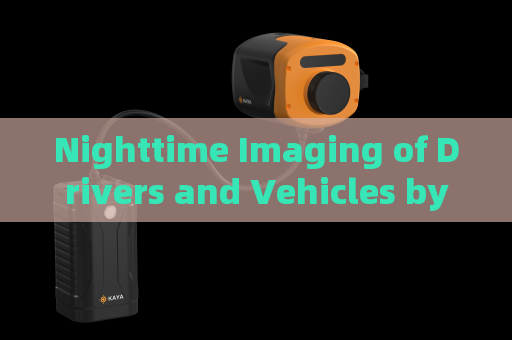
Further refining this scenario, the penetration imager demonstrates robustness in complex nighttime environments, including urban settings with artificial light pollution or remote areas with minimal infrastructure. Its ability to function through fire-affected zones, where it improves visibility by three to five times against flames, proves valuable for accident rescues involving vehicles, though it remains ineffective against dense smoke. Training programs for emergency responders highlight techniques to optimize imaging angles against curved or tinted windows, ensuring consistent performance across diverse vehicle types. By integrating with digital recording systems, the penetration imager facilitates data analysis for forensic purposes, contributing to prosecutions and safety audits without compromising stealth or safety. This targeted capability underscores its role as a specialized tool for nighttime vehicular imaging, advancing public security through optical innovation.