Operational scenarios often present severe imaging challenges, particularly under strong backlight conditions common in vehicle interdictions, building surveillance near windows, or outdoor monitoring against the sun. Conventional optical systems, including standard cameras and even some thermal imagers, suffer from extreme contrast loss, glare, and silhouette effects. Critical details on the target side facing the observer are washed out, as sensors are overwhelmed by intense ambient light flooding from behind the subject. This creates a significant reconnaissance gap, where identifying faces, reading instruments, or assessing occupant status through sunlit windows becomes unreliable or impossible, directly impacting situational awareness and decision-making accuracy in law enforcement and emergency response. The penetration imager emerges as a dedicated solution to this specific photonic problem.
The core functionality addressing this challenge is the penetration imager's laser range-gated imaging, or gated imaging technology. This active imaging system employs a synchronized high-repetition-rate pulsed laser and a gated intensified camera. The key lies in precise temporal control. A short, powerful laser pulse illuminates the scene. The camera's shutter, linked to a microchannel plate intensifier, remains closed until the precise moment the laser light reflects off the target of interest at a specific distance. It opens only for a nanoseconds-wide "gate," collecting the useful signal from that designated range. This process effectively rejects all ambient light—including the overpowering backlight—that arrives outside this ultrashort time window. The system actively creates its own controlled illumination scenario, decoupling the imaging process from the problematic environmental lighting.
In practice against a strong backlight, such as observing a vehicle's interior through a sunlit windshield, an operator directs the penetration imager at the target. The system is configured for the approximate distance to the window and interior. When activated, the laser pulse traverses the glass and illuminates the interior. The intense sunlight reflecting off the windshield’s exterior surface arrives at the detector at a slightly different time and is excluded by the closed gate. Only the light that traveled to the interior cabin and back within the gated period is amplified and captured. The result is a high-contrast image revealing details inside the vehicle—dashboard layouts, occupant movements, or objects on seats—that are completely obscured to the naked eye or conventional optics by glare. The target imaging capability is thus restored not by passively filtering light, but by actively selecting the photons of interest based on their time-of-flight.
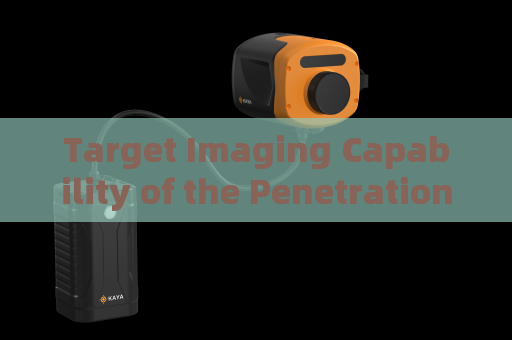
This capability extends efficacy to other strong backlight scenarios involving optical media. Monitoring a room through a bright glass幕墙 from a shaded position, or conducting maritime interdiction where targets are silhouetted against the skyline at dawn, follows the same principle. The penetration imager’s controlled laser illumination and temporal gating overcome the dynamic range limitations of passive sensors. It transforms an optically hostile high-contrast environment into a controllable one, providing intelligence-grade imagery where it was previously unattainable. This specific advancement in the penetration imager’s target imaging capability directly translates to enhanced operational effectiveness and officer safety in complex photonic environments.