Severe weather conditions such as dense fog, torrential rain, or blizzards pose significant challenges for normal road vehicle monitoring. Conventional optical surveillance systems often struggle with reduced visibility and image degradation due to light scattering and absorption by atmospheric particles. This results in blurred visuals, hampered license plate recognition, and compromised vehicle tracking, which can impede traffic safety and law enforcement efforts. In these scenarios, the penetration imager offers a targeted solution to address these imaging deficiencies by enhancing clarity through adverse weather.
The penetration imager employs laser range-gated imaging technology to overcome weather-related obstacles. As an active imaging system, it integrates a high-repetition-rate pulsed laser and a gated camera with an image intensifier, enabling precise control over light exposure. This design allows the penetration imager to penetrate optical media like fog, haze, and precipitation, effectively minimizing backscatter and maintaining high-contrast images. Its capability to deliver clear visuals through such disturbances directly supports reliable road vehicle monitoring, ensuring consistent data acquisition without interference from weather elements.
In operational settings for road surveillance, the penetration imager is deployed at strategic locations such as highways or urban intersections. By synchronizing laser pulses with camera gating, the system captures detailed vehicle images even in low-visibility conditions, facilitating accurate identification of features and movements. This enhances real-time traffic management and emergency response, as the penetration imager provides uninterrupted monitoring capabilities. Its robust performance across diverse severe weather conditions underscores its utility in maintaining surveillance continuity, with minimal need for manual adjustments.
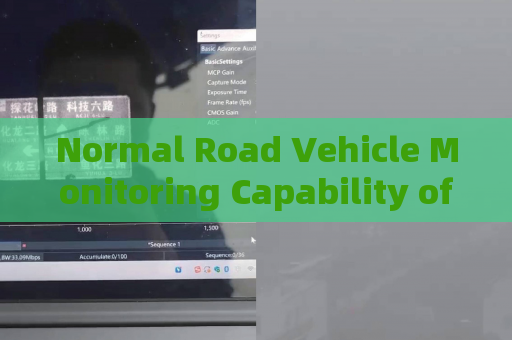
Further analysis reveals that the penetration imager excels in specific scenarios like fire incidents, where it can improve visibility by 3-5 times through flames and light smoke, though it remains ineffective against thick smoke due to its optical limitations. This focused functionality highlights its role in integrated security systems, where penetrating optical disturbances is crucial for comprehensive monitoring. It is essential to note that the penetration imager operates solely within the realm of light-based imaging, without the ability to penetrate non-optical solids like walls or metals, adhering strictly to its defined technological boundaries.