Border surveillance in severe weather conditions poses a critical operational challenge for security forces worldwide. Traditional optical monitoring systems, including standard cameras and thermal imaging devices, often fail in environments dominated by fog, haze, rain, or snow. These atmospheric elements act as optical media that scatter and absorb light, creating intense backscatter that obscures targets at long distances. Consequently, surveillance gaps emerge, allowing trespassers to exploit reduced visibility for unauthorized border crossings. This vulnerability compromises perimeter security, especially in remote areas where weather patterns are unpredictable and harsh. The penetration imager presents a targeted solution to this persistent issue, designed specifically to overcome optical interferences in such demanding scenarios.
The penetration imager resolves these visibility problems through its laser range-gated imaging technology, an active system that excels in severe weather. It comprises a high-repetition-rate pulse laser, a gated intensified camera with components like a microchannel plate intensifier and timing modules, along with beam expanders and imaging lenses. By emitting controlled laser pulses and synchronizing the camera's gating mechanism, the system selectively captures light reflected from targets while rejecting scattered light from intervening optical media like fog or precipitation. This process enables high-contrast imaging at ultra-long ranges, effectively penetrating weather-based obstructions without compromising resolution. The technology's ability to mitigate backscatter ensures clear detection of trespassers even in dense mist or heavy snowfall, addressing the core need for reliable border monitoring under adverse conditions.
In practical border security operations, the penetration imager is deployed at strategic observation points along frontiers. Operators configure the system by adjusting parameters such as laser pulse duration and gating timing to match specific weather conditions, such as blizzards or torrential rain. The imager provides real-time video feeds that identify human movements at distances exceeding several kilometers, far beyond the capabilities of conventional optics. For instance, during a snowstorm, the penetration imager can maintain visibility where other systems fail, allowing security teams to track trespassers with high accuracy. Its integration with command centers facilitates rapid response, enhancing interception efforts. Field assessments note that the imager also improves visibility in fire-affected areas by three to five times, though it remains ineffective against dense smoke, aligning with its design limits for optical media penetration.
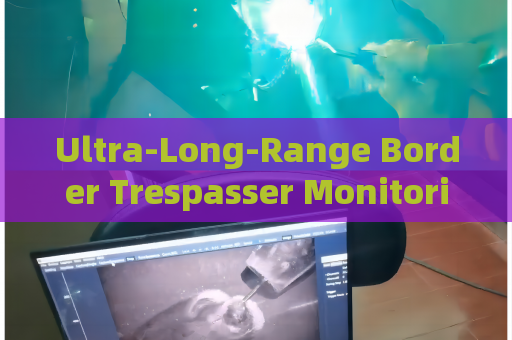
The operational effectiveness of the penetration imager is further refined through its component optimization for long-range applications. In severe weather, the system demonstrates resilience against elements like light smoke or fire, but it strictly functions within optical domains, unable to penetrate non-transparent solids such as walls or metals. Deployment involves continuous calibration to adapt to changing weather patterns, ensuring sustained performance in dynamic border environments. Data from these systems supports proactive surveillance strategies, reducing false alarms and enhancing situational awareness. As border threats evolve, the penetration imager sets a benchmark for optical imaging in security, proving indispensable for trespasser detection in the most challenging climates. Its role underscores a shift toward technology-driven solutions that maintain integrity across all weather extremes, with the penetration imager at the forefront of this advancement.