Border surveillance systems face a critical vulnerability during severe weather. Heavy rain, dense fog, snowstorms, and thick haze drastically reduce visibility, creating blind spots that can be exploited. Traditional optical cameras and even many thermal imaging systems struggle under these conditions, their performance degraded by scattered light and atmospheric particles. This leads to significant surveillance gaps, compromising perimeter security and operational continuity during precisely the times when monitoring is most crucial. The penetration imager is engineered to address this fundamental weakness, offering a solution to see clearly when conventional vision fails.
The core capability of this system lies in its active laser range-gated imaging technology. Unlike passive sensors that rely on ambient light or thermal radiation, the imager projects its own synchronized, high-frequency pulsed laser illumination. The key to defeating weather interference is precise temporal control. A specialized gated camera, equipped with a microchannel plate intensifier and synchronized timing modules, opens its shutter only for the exact moment when the reflected light from the target returns. This narrow time window effectively excludes the backscattered light from fog, rain, or snowflakes close to the illuminator. Therefore, the signal from the distant object of interest is captured with high contrast, while the obscuring optical media are rendered transparent to the system. It transforms obstructive weather from a barrier into a penetrable medium.
In practical deployment along remote borders, the imager is integrated into fixed observation posts or mobile patrol units. Operators interface with the system to select specific range gates, effectively "slicing through" the weather at designated distances. During a snowstorm, the system filters out the falling snow between the sensor and a perimeter fence line several hundred meters away, providing a stable, clear image of the monitored zone. In persistent fog, it maintains watch over critical crossing points where standard cameras would show only a diffuse white glow. The operational methodology is continuous and autonomous, requiring no change in procedure during deteriorating conditions, thus ensuring the surveillance loop remains unbroken.
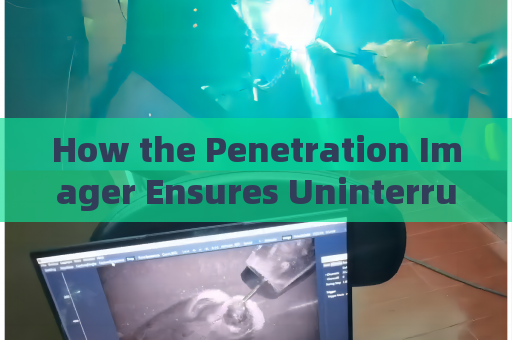
The effectiveness is quantifiable in enhanced situational awareness. Field reports indicate the technology can improve visibility in conditions like fire glow, fog, and precipitation by a factor of three to five, directly translating to extended detection ranges and higher identification confidence in severe weather. This capability ensures that a border surveillance network does not have a "fair-weather only" limitation. The persistent, clear imaging feed provided by the penetration imager allows command centers to maintain real-time situational awareness and make informed decisions regardless of atmospheric conditions, solidifying perimeter integrity against all elements.