In international tactical operations, reconnaissance and surveillance equipment often face significant challenges in achieving clear, real-time imaging under adverse conditions. Emergency responders, law enforcement agencies, and military units frequently encounter obscured visibility due to optical media such as smoke, fog, haze, rain, snow, or barriers like vehicle windows, train glass, aircraft portholes, and building幕墙. Traditional passive imaging systems, including standard cameras or even thermal imagers, struggle with low contrast, backscatter interference, and limited penetration through these transparent or semi-transparent obstacles. This hampers situational awareness, delays critical决策, and increases operational risks during missions such as hostage rescues, anti-terrorism activities, or disaster relief. The need for an advanced, reliable imaging solution that can actively overcome these limitations is paramount. Enter the Tactical Penetrating Imager—a cutting-edge optical instrument designed to address these very pain points by leveraging state-of-the-art laser-based technology for superior image clarity in complex environments.
The Tactical Penetrating Imager resolves these challenges through its core capability of laser range-gated imaging, also known as gated imaging technology. This system operates as an active imaging device, comprising a high-repetition-rate pulsed laser, a gated intensified camera (which integrates components like a Microchannel Plate (MCP) image intensifier, high-voltage module, and timing module), a beam expander, and an imaging lens. The principle involves emitting short, controlled pulses of laser light toward the target area. The camera’s gate is synchronized to open only when the reflected light from the desired distance returns, effectively filtering out unwanted scattered light from intervening media like smoke,雾, or rain. This allows the Tactical Penetrating Imager to achieve high-contrast imaging with extended range, high resolution, and robust anti-interference performance, notably overcoming backscatter effects. Crucially, it can penetrate optical介质 such as car windows,高铁车窗,飞机舷窗, and glass幕墙, providing clear views through these barriers. Additionally, it performs reliably in the presence of火,烟,雾,霾,雨, and雪, as these are all optical disturbances that the gating mechanism mitigates. It is essential to emphasize that this imager functions solely within the realm of light-based optics; it does not penetrate non-transparent solids like walls, concrete, brick, clothing, metal, or wood, nor does it employ rays, radiation, X-rays,超声波, or radio waves. Its differentiation from non-optical devices like through-wall radar, sonar, thermal imagers, or X-ray machines is absolute, ensuring precise application in scenarios where optical penetration is key.
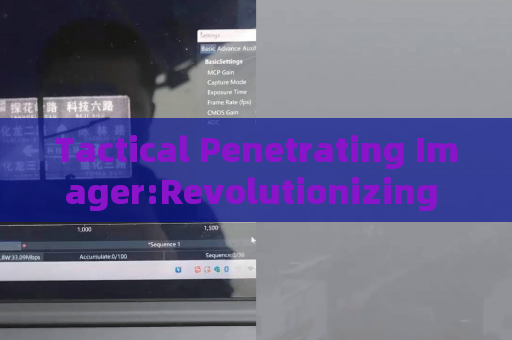
The application prospects for the Tactical Penetrating Imager are vast, spanning law enforcement, military reconnaissance, border security, firefighting, and search-and-rescue operations. Its advantages—including long operational range, high-resolution output,主动成像 capability, and resilience against environmental clutter—make it invaluable for missions requiring stealthy observation through windows in urban settings, monitoring during poor weather, or assessing interiors of vehicles and aircraft without physical intrusion. By enhancing visibility in conditions where traditional optics fail, this imager boosts mission成功率, reduces risks to personnel, and enables faster, more informed decisions. As technology evolves, integration with other sensors (while maintaining distinct optical principles) could further augment tactical suites. In summary, the Tactical Penetrating Imager represents a significant leap forward in optical reconnaissance, offering a specialized solution to longstanding imaging hurdles. Its adherence to light-based mechanics ensures safe, effective deployment across diverse high-stakes scenarios, solidifying its role as a critical tool in modern tactical arsenals.