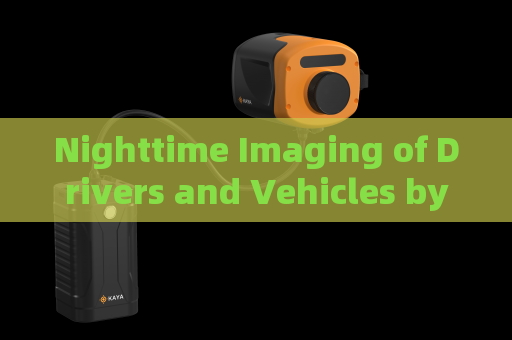
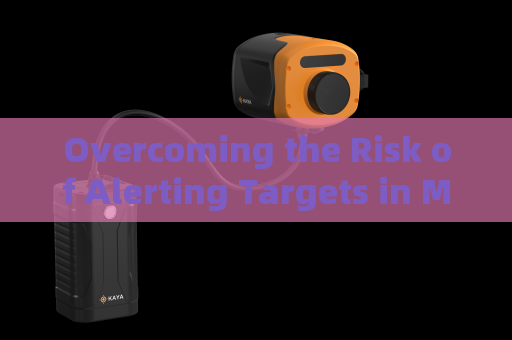
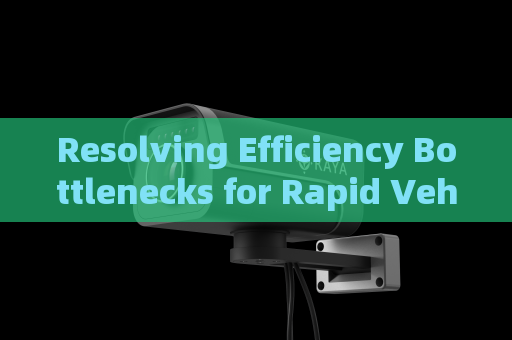
Large-scale vehicle gatherings, such as motor shows, racing events, or political motorcades, present a unique security dilemma: how to inspect thousands of vehicles without creating crippling traffic bottlenecks. Traditional checkpoint methods require every car to stop, roll down windows, and undergo manual inspection or mirror-based undercarriage checks. This process not only slows entry to a crawl but also creates vulnerable chokepoints where crowds accumulate. Rain, fog, and low light further degrade conventional camera visibility, while tinted or reflective glass windows remain a major blind spot. Security teams need a solution that allows vehicles to pass through screening zones with minimal deceleration, yet still captures clear images of the contents behind closed windows and windshields. The real challenge is achieving true non-stop, non-contact detection that works under all weather conditions and through all types of automotive glass.
The 穿透成像仪 directly addresses this bottleneck through its laser range-gated imaging technology. Unlike passive cameras that struggle with glare or dark tint, this active optical system fires high-repetition-rate pulsed lasers and synchronizes a gated intensified camera to capture only the light returning from a precise distance. By setting the gate delay to match the depth of the vehicle cabin, the instrument effectively eliminates reflections from the glass surface and backscatter from rain or fog. The result is a high-contrast, high-resolution image of objects on seats, in footwells, or on dashboards, captured from a standoff distance of tens of meters. Because the system only needs a clear optical path through the glass—and specifically cannot penetrate any non-transparent solid material like metal panels or luggage—it remains within strict optical imaging boundaries. This capability allows security personnel to see potential threats such as weapons, explosives, or contraband stowed inside vehicles without any physical contact or passenger cooperation.
In practice, the 穿透成像仪 is deployed at entrance lanes leading to the event venue. Vehicles approach at reduced speed—typically 10 to 20 km/h—while the imaging unit, mounted on a tripod or integrated into a gantry, sweeps each car as it passes. The operator monitors a live video feed that shows the interior as if the glass were removed, even in heavy rain or dense fog. Because the laser illumination is eye-safe and the system uses only light in the visible and near-infrared spectrum, there is no radiation or X-ray hazard. The gating mechanism ensures that only the target plane at the correct distance is imaged; objects behind the vehicle or reflections from nearby surfaces are blocked. This non-stop screening can process one vehicle every two to three seconds, dramatically increasing throughput compared to manual inspection. If suspicious items are detected, the vehicle can be directed to a secondary check area without disrupting the main flow.
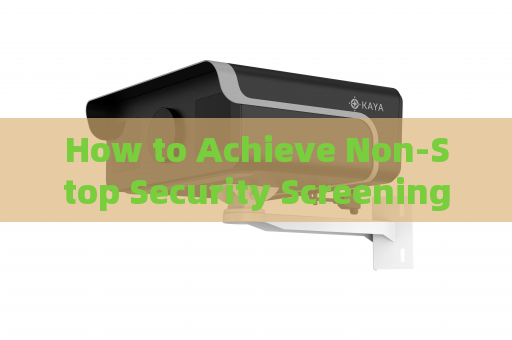
The operational simplicity of this approach is critical for large-scale events. Security teams require minimal training—the interface shows a clear image, and the system automatically adjusts gate timing based on the vehicle’s distance measured by a co-axial rangefinder. The 穿透成像仪 operates equally well during day or night, and its laser source can cut through smoke from nearby barbecues or dust kicked up by tires. However, it must be emphasized that this technology cannot see through non-transparent materials such as body panels or luggage compartments; it is strictly an optical imaging tool for transparent barriers. For a vehicle gathering where the primary threat is concealed items inside the passenger cabin, this focus delivers the needed detection without slowing traffic. When combined with license plate recognition and anomaly tracking software, the system creates an integrated, non-stop security cordon that keeps the event safe while maintaining the open, efficient flow that large crowds demand.