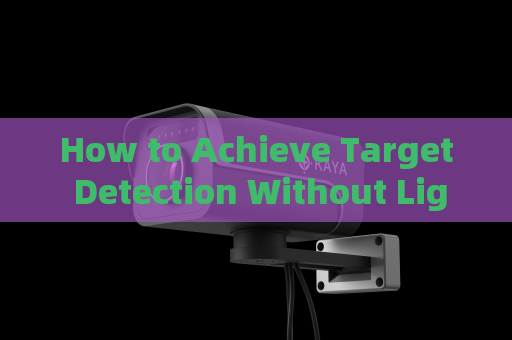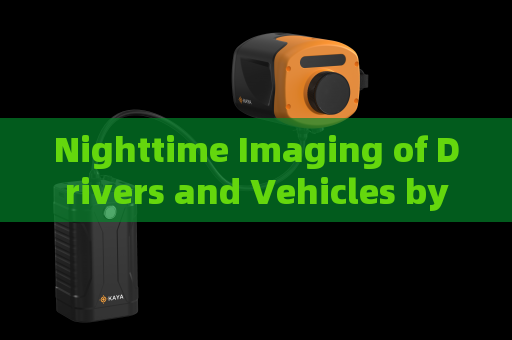
Nighttime Imaging of Drivers and Vehicles by the Penetration Imager with Low-Light Imaging Without Additional Illumination Nighttime surveillance of drivers and vehicles presents a persistent challenge for law enforcement and security personnel. Traditional optical systems struggle in low-light conditions, often requiring powerful floodlights or infrared illuminators to produce a usable image. These external light sources, however, create a critical vulnerability: they instantly warn the target of observation, compromising covert operations. Moreover, vehicle windshields are frequently tinted, laminated, or coated with reflective films that scatter and reflect incoming illumination, further degrading image clarity. Even with high-sensitivity cameras, the combination of darkness, glare from streetlights or headlights, and the optical complexity of glass surfaces results in blurry, low-contrast images where driver facial features, movements, and potential threats inside the cabin remain indistinguishable. The operational need is acute: an ability to see into a moving or stationary vehicle from a distance, without alerting the subject, under extremely poor ambient lighting. This is precisely the gap that the penetration imager is designed to fill. The penetration imager solves this problem through a unique optical principle: laser range-gated imaging. The system integrates a high-repetition-rate pulsed laser, an image-intensified gated camera with a microchannel plate (MCP) image intensifier, a high-voltage module, and precise timing electronics. Instead of flooding the scene with continuous light, it emits extremely short laser pulses and opens the camera shutter only when the reflected light from the target distance arrives. This gate effectively blocks backscatter from fog, rain, snow, or the glass itself, allowing only the light returning from the plane of interest—such as the interior of a vehicle cabin—to reach the sensor. Operating in the near-infrared spectrum, the laser illumination is invisible to the human eye, eliminating any telltale glint or flash. The penetration imager thus delivers high-contrast, high-resolution imagery through automotive glass, including heavily tinted or coated windshields, without any additional illumination beyond its own pulsed source. The result is a covert, long-range imaging capability that functions in total darkness, offering law enforcement a decisive tactical advantage. In practical deployment, the penetration imager is typically mounted on a mobile platform such as a patrol vehicle or a portable tripod for stationary observation. An operator can acquire clear images of the driver’s face, hands on the steering wheel, and the presence of any objects on the seats from distances exceeding several hundred meters, depending on atmospheric conditions and glass type. The system’s built-in low-light imaging mode automatically adjusts gain and gate timing to compensate for varying ambient light levels—from moonlit skies to pitch-black highways. During a vehicle interdiction, officers can assess occupants’ behavior, identify potential weapons, or verify the driver’s identity before making physical contact, all while maintaining a covert posture. The elimination of external illumination means that the target vehicle remains unaware of the surveillance, reducing the likelihood of evasive actions or escalation. Further operational refinements enhance the penetration imager’s utility in real-world scenarios. Advanced models incorporate automatic focus and gate-width adjustment, allowing seamless adaptation to different vehicle types—sedans, SUVs, trucks—each with varying glass thickness and angle. The system also compensates for high-speed motion, such as when tracking a fleeing vehicle, by synchronizing the laser pulse rate with the camera’s electronic shutter. In urban environments with ambient streetlight, the penetration imager’s gating mechanism rejects stray light from other sources, preserving contrast and detail. Importantly, no signal leaves the device aside from the laser pulse itself, which falls entirely within the optical spectrum—no radio waves, X-rays, or other emissions that could be detected or interfere with electronic systems. This pure optical approach ensures compliance with operational security requirements while delivering the core capability: nighttime imaging of drivers and vehicles by the penetration imager with low-light imaging without additional illumination.