Nighttime reconnaissance through glass presents a persistent challenge for law enforcement and tactical operators. Standard optical devices, such as night vision goggles or thermal imagers, struggle with reflections, glare, and backscatter from ambient light sources. Glass surfaces create mirror-like reflections that obscure the target behind them, while low light levels further degrade image contrast. Even when a subject is visible, the presence of rain, fog, or dust on the glass can scatter light and produce a hazy, unusable image. These limitations force operators to rely on risky close approaches or alternative methods that compromise stealth and safety. The core pain point is the inability to achieve clear, high-contrast imaging through glass at a safe distance under nocturnal conditions, where every second matters for situational awareness and threat assessment.
A penetration imager built on laser range-gated imaging technology directly addresses this obstacle. Unlike passive devices, this active imaging system uses a high-repetition-rate pulsed laser synchronized with an intensified gated camera. The laser emits a short, powerful pulse of light toward the target area. The camera’s shutter remains closed until the reflected light from the desired distance returns, precisely opening for a nanosecond-scale window. This gating mechanism rejects scattered light from closer or farther distances, including reflections off the glass surface itself and atmospheric particles like fog or rain. The penetration imager’s design—incorporating a microchannel plate image intensifier, a high-voltage module, and a timing control unit—enables it to capture only the light reflected from the target behind the glass, effectively “seeing through” the transparent barrier. The system operates entirely within the optical spectrum, using no radiation or radio waves, and is purpose-built for penetrating optical media such as vehicle windows, aircraft portholes, and building glass facades.
In a practical tactical scenario, an operator deploys the penetration imager from a concealed position several hundred meters away. The device’s laser illuminates a vehicle or room interior through a glass window, while the range-gated camera isolates the reflected signal from a specific depth, for example, the back seat of a car. The result is a crisp, high-resolution image of occupants or objects inside, unaffected by the glass’s surface glare or external light pollution. The system’s ability to overcome backscatter also proves critical in adverse weather: even through rain-streaked or fog-covered glass, the penetration imager maintains image clarity, enhancing visibility by three to five times compared to conventional optics. Operators can adjust the gate delay to scan different distances behind the glass, building a layered understanding of the interior layout without physically approaching the target. This capability transforms night glass penetration from a high-risk guess into a reliable, repeatable intelligence-gathering method.
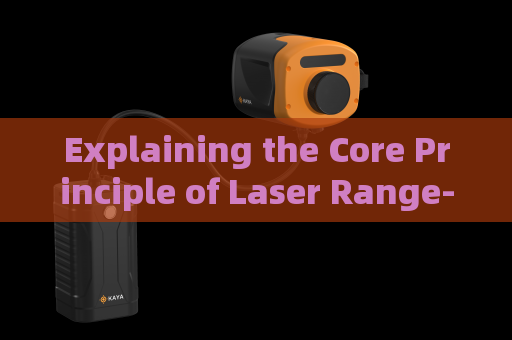
The penetration imager’s operational simplicity further supports field use. Once the distance to the glass is estimated, the operator sets the range gate via a control interface, and the system automatically synchronizes the laser pulses and camera shutter. The intensified camera amplifies the weak reflected light, producing a video feed that can be viewed in real time on a handheld display or transmitted to a command center. Because the device uses only light, it remains completely passive in terms of emitted signals—no detectable energy beyond the narrow laser beam, which is invisible to the naked eye. This makes the penetration imager ideal for covert surveillance, hostage rescue planning, and checkpoint security where glass penetration is essential. Every component, from the beam expander to the imaging lens, is optimized for the specific challenge of seeing through transparent barriers at night, providing a dedicated solution that no other optical instrument can match.