In tactical law enforcement and counterterrorism operations, the ability to detect hidden threats inside vehicles during nighttime or extremely low-light conditions presents a critical challenge. Traditional night vision devices rely on ambient light or require active infrared illuminators, but any supplementary lighting source—whether visible or near-infrared—immediately alerts suspects to the presence of surveillance, compromising covertness. Furthermore, standard low-light cameras struggle with glare from headlights, street lamps, or reflections off windshields, while thermal imagers are often blocked by glass or produce poor contrast against warm interiors. The core pain point is clear: officers need a non-intrusive, passive-looking solution that can see through automotive glass and identify concealed persons or objects without emitting any detectable external light. This is where the penetrating imager offers a transformative capability, addressing the exact requirement of covert target detection without supplementary lighting sources with low-light imaging.
The penetrating imager is an advanced optical instrument based on laser range-gated imaging technology. It consists of a high-repetition-rate pulsed laser, an intensified gated camera equipped with an MCP image intensifier, a timing module, a beam expander, and an imaging lens. Unlike conventional low-light systems that flood the scene with continuous illumination, the penetrating imager emits ultra-short laser pulses synchronized with a fast-gated camera. This allows it to selectively capture light reflected from a specific distance while rejecting backscatter from fog, rain, or the vehicle glass itself. The system operates in complete darkness without any external supplementary lighting, making it ideal for covert surveillance. Its ability to penetrate optical media such as automotive window glass, airplane portholes, and glass curtain walls is a direct solution to the detection problem. The penetrating imager delivers high-contrast, long-range imagery even under extreme low-light conditions, effectively overcoming the limitations of both passive night vision and active infrared illuminators that would betray an officer’s position.
In practice, an officer can deploy the penetrating imager from a concealed position—for example, from a parked observation vehicle or a rooftop—and aim it at a suspect’s car parked 100 meters away. The operator activates the system, which emits an invisible pulsed laser beam. Because the gated camera opens only for the precise moment when the reflected laser pulse returns from the target window plane, any light scattered by rain, dust, or the glass surface is effectively blocked. The resulting image reveals the interior of the vehicle with remarkable clarity: occupants, weapons, or contraband become visible through the windshield or side windows, even if the cabin is pitch black. The penetrating imager operates silently and emits no visible or near-infrared glow detectable by the suspect’s own night vision goggles or camera sensors. This ensures total tactical surprise while providing actionable intelligence for raid planning or threat assessment.
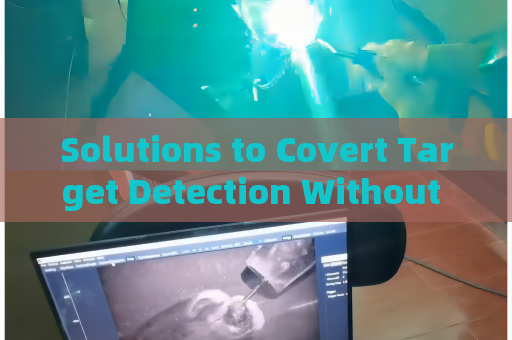
The operational advantages extend beyond simple detection. Because the penetrating imager uses active laser illumination only for the precise depth of interest, it can peer through multiple layers of glass—such as a car’s windshield with a tinted film—without losing contrast. The system’s high dynamic range handles bright ambient light from street lamps or oncoming headlights without saturation, while maintaining the ability to see into deep shadows inside the vehicle. In scenarios where suspects are using their own mobile phone screens or dashboard lights, the penetrating imager still delivers clear images of the entire cabin. This makes it an indispensable tool for hostage rescue, border security checkpoints, and vehicle interdiction operations. The penetrating imager, therefore, stands as the definitive answer to the challenge of covert target detection without supplementary lighting sources with low-light imaging, enabling law enforcement to see the unseen without ever revealing their own presence.