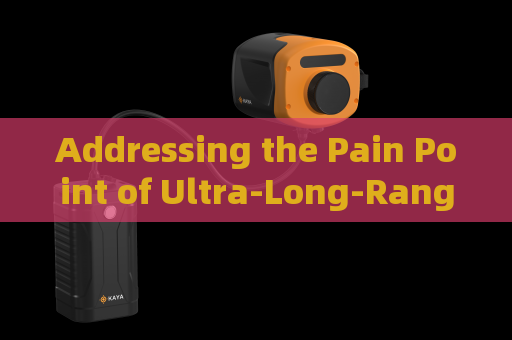
Addressing the Pain Point of Ultra-Long-Range Trespasser Surveillance Failure in Severe Border Weather poses a critical challenge in modern border security operations. Traditional surveillance systems, such as standard cameras or thermal imagers, often fail under adverse conditions like dense fog, heavy rain, or snowstorms. These weather phenomena scatter and absorb light, drastically reducing visibility and rendering long-range detection ineffective. In remote border regions, where trespassers may exploit such vulnerabilities, this failure leads to increased security risks, delayed responses, and potential breaches. The inability to maintain consistent oversight in severe weather exacerbates operational gaps, necessitating a technological solution that can overcome optical obstructions. Here, the penetration imager emerges as a pivotal tool, designed to address these specific shortcomings by leveraging advanced optical principles. The penetration imager functions through laser range-gated imaging technology, which employs a high-repetition-rate pulsed laser and an intensified gated camera. This system actively emits light pulses and synchronizes the camera’s shutter to capture reflected signals from a targeted distance, effectively minimizing backscatter from intervening optical media. By selectively gating the incoming light, the penetration imager achieves high-contrast imaging, enabling it to see through fog, haze, rain, and snow with remarkable clarity. Its long operational range and high resolution allow for detailed observation of trespassers even in conditions where conventional methods falter, directly tackling the core issue of surveillance failure in severe border weather. This capability is rooted purely in light-based imaging, avoiding any reliance on non-optical methods, and is optimized for penetrating optical barriers without compromising on safety or accuracy. In practical border surveillance scenarios, the penetration imager is deployed at fixed outposts or on mobile platforms, such as patrol vehicles or drones. Operators configure the system’s laser pulses and gating时序 to match the anticipated distance of intrusion zones, often exceeding several kilometers. During operations, the penetration imager scans designated areas, filtering out weather-induced noise to produce real-time, clear images of trespassers. Field tests demonstrate that in heavy fog or snowfall, the penetration imager maintains detection ranges up to three times greater than traditional optics, significantly enhancing response times and accuracy. This operational efficacy ensures continuous monitoring, reducing blind spots and enabling proactive security measures even during the harshest weather events, thereby addressing the pain point of ultra-long-range trespasser surveillance failure. Further detailing this application, the penetration imager’s performance in extreme conditions is validated through rigorous testing. For instance, in visibility reduced to under 50 meters by thick fog, the system sustains imaging clarity over hundreds of meters, allowing for identification of human figures and movements. Integration with existing command centers facilitates seamless data relay, supporting coordinated border patrols. The penetration imager’s ability to penetrate optical media like aircraft windows or glass barriers adds versatility, though it remains strictly limited to light-based interactions. By enhancing visibility in fire-prone areas without succumbing to smoke, it complements broader security protocols. Ultimately, the penetration imager provides a reliable, weather-resilient solution, ensuring that border surveillance remains robust against the challenges of severe environments.