Sea fog poses a persistent and severe challenge to maritime domain awareness, creating a critical operational vulnerability. In conditions of dense fog, traditional surveillance systems, including standard optical cameras and even thermal imagers, experience significant performance degradation. Visibility can drop to mere meters, rendering the detection, identification, and tracking of vessels, navigation hazards, or individuals overboard nearly impossible. This sensory gap directly compromises safety, security, and operational efficiency, increasing the risk of collisions, impeding search and rescue missions, and creating blind spots for border and facility security. The inherent scattering of ambient light by fog particles obscures targets, making passive imaging systems ineffective. The core problem is the need to acquire high-contrast, detailed visual intelligence through an obscuring optical medium where conventional sight fails.
The fog penetration imaging system addresses this precise challenge by utilizing an active imaging methodology based on Laser Range-Gated Imaging technology. This system does not rely on ambient light but actively illuminates the scene with a high-repetition-rate pulsed laser. The key functional principle is precise temporal control, or gating. The system's intensified gated camera remains closed during the initial laser pulse emission and the subsequent period when light is heavily scattered by fog particles close to the transmitter. After a carefully calculated delay corresponding to the time it takes for light to travel to the target and back, the camera's gate opens for an extremely brief window. This synchronization ensures the camera primarily collects the laser pulses reflected from the distant target, while rejecting the majority of the backscattered light from the fog itself. This selective reception is the mechanism that suppresses interference and enables high-contrast imaging through the obscurant.
In practical maritime deployment, the penetration imager is typically integrated onto coastal observation towers, patrol vessels, or unmanned surface vehicles. An operator adjusts the range gate parameters—delay and width—to match the estimated target distance and prevailing visibility conditions. The system’s laser, often operating in eye-safe wavelengths, projects a narrow beam expanded to cover the field of view. The real-time video output reveals a scene where fog interference is dramatically minimized. Contrast is restored, allowing for the clear identification of a ship's hull, superstructure, navigation lights, and even markings at distances several times greater than what is possible with passive sensors. Compared to thermal imaging, which may show a blurry heat signature in fog, the laser gated imaging provides superior resolution and detail, crucial for positive identification. This capability transforms a obscured seascape into a monitorable domain, enabling continuous watch and early warning.
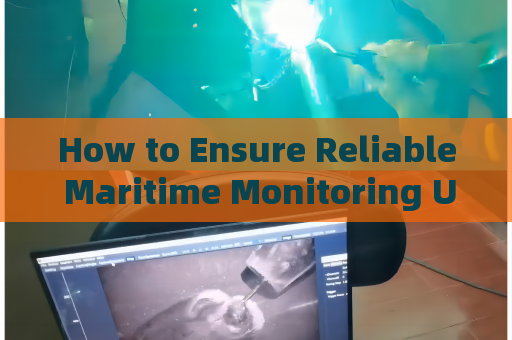
The operational advantage extends into dynamic scenarios such as monitoring vessel traffic in congested foggy straits or guiding patrol boats during interdiction operations. The system's ability to penetrate not only fog but also light rain, snow, or haze ensures all-weather reliability. Its effectiveness is quantified by a significant increase in effective visual range under degraded conditions, directly enhancing situational awareness. The imaging process is non-invasive, relying solely on reflected light, and poses no conflict with the defined functional boundaries; it penetrates only the optical medium of the fog, not solid structures. By providing a clear visual window where none naturally exists, this technology fundamentally ensures the reliability of maritime monitoring, turning a historical weakness into a managed parameter and safeguarding lives and assets against the veil of sea fog.