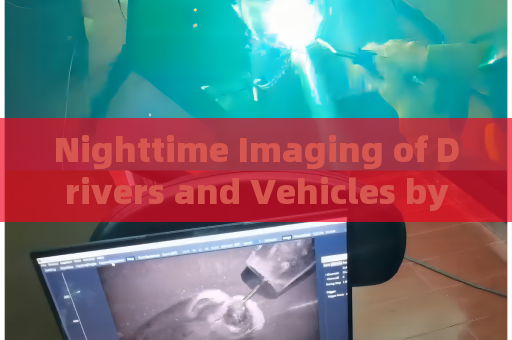
Nighttime Imaging of Drivers and Vehicles by the Penetration Imager with Low-Light Imaging Without Additional Illumination In nighttime law enforcement and security operations, imaging drivers and vehicles presents significant challenges. Low ambient light conditions severely limit the effectiveness of conventional cameras, often necessitating additional illumination that can alert subjects, compromise covert activities, or create glare and reflections from optical media such as car windows. These issues hinder accurate identification of individuals, detection of suspicious behaviors, or verification of vehicle contents, particularly in scenarios like traffic stops, border patrols, or urban surveillance. The need for a discreet, reliable solution that operates without external light sources is critical, as traditional methods fail to penetrate glass surfaces or overcome environmental interferences like fog, rain, or haze, leading to obscured visuals and operational delays. The penetration imager addresses these pain points through its low-light imaging capability without additional illumination. As an advanced optical instrument employing laser range-gated imaging technology, it integrates a high-repetition-rate pulsed laser and a gated intensified camera with components like a microchannel plate intensifier, high-voltage module, and timing unit. This active imaging system emits pulsed light that synchronizes with the camera’s gating mechanism, allowing it to selectively capture reflected light from specific distances while rejecting scattered light. This enables the penetration imager to penetrate optical media such as vehicle windows, train glass, or aircraft windows, providing high-contrast images with extended range, high resolution, and strong resistance to backscatter. By operating solely within the light spectrum, it avoids the intrusiveness of extra lighting and effectively mitigates interference from fire,雾,霾, rain, or snow, though it remains ineffective against dense smoke. In practical application, the penetration imager transforms nighttime driver and vehicle imaging. During traffic checks or security sweeps, operators deploy the system to target cars or trucks, where it captures clear, detailed visuals of interior spaces and occupant faces through windshield or side glass. The process involves aiming the imager’s beam expander and imaging lens at the vehicle, with the pulsed laser illuminating the scene imperceptibly. The gated camera then records images with enhanced visibility, often revealing details like driver identification, seatbelt usage, or concealed items without alerting suspects. Field reports indicate that this technology improves image clarity by three to five times in火场 scenarios, boosting operational efficiency in emergencies, while maintaining performance in adverse weather like heavy rain or fog, where traditional optics would falter. The operational nuances of the penetration imager further underscore its value in nighttime scenarios. By adjusting the gating timing and laser pulses, users can optimize imaging depth and contrast for varying distances and glass types, such as tinted windows or reflective surfaces. In extended surveillance, the system’s ability to function without附加照明 reduces power consumption and logistical burdens, enabling prolonged monitoring of highways or checkpoints. Its compatibility with other警用 tools enhances集成 responses, though it strictly remains within optical boundaries—incapable of penetrating non-optical solids like walls, metal, or clothing. This focus on light-based imaging ensures safe, non-invasive inspections, reinforcing the penetration imager as a cornerstone in modern nighttime reconnaissance for driver and vehicle assessment.