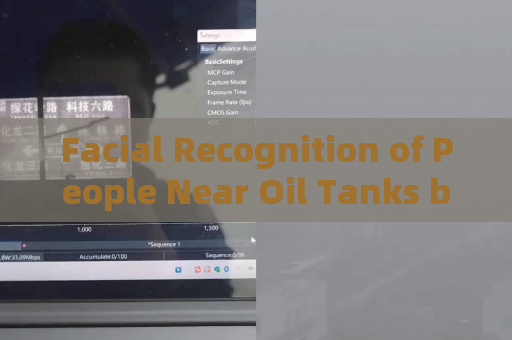
Facial Recognition of People Near Oil Tanks by the Penetration Imager Under Port Light Glare Night Vision Interference with Strong Light Suppression Imaging Security surveillance in port oil tank areas during nighttime operations encounters significant optical challenges. Intense glare from port lighting fixtures severely degrades conventional night vision systems, causing overexposure and loss of image detail. This interference renders facial recognition of individuals near oil tanks nearly impossible, compromising threat detection and access control. The persistent glare, combined with low-light conditions, creates a critical gap in monitoring capabilities, where unauthorized approaches or suspicious activities may go undetected. Traditional imaging methods fail to suppress such strong light sources while maintaining target visibility. The penetration imager emerges as a technological solution tailored to these specific environmental constraints, addressing the core issue of optical interference in critical infrastructure security. The penetration imager leverages laser range-gated imaging technology to deliver strong light suppression imaging, directly countering port light glare. This active optical system comprises a high-repetition-rate pulsed laser, a gated camera with an image intensifier, beam expanders, and imaging lenses. By synchronizing laser pulses with the camera's gating mechanism, the instrument selectively captures light reflected from target distances while rejecting scattered or backscattered light from glare sources. This process enables high-contrast imaging through optical media such as fog, haze, or rain, which are common in port environments. The key functionality lies in its ability to mitigate night vision interference from artificial lighting, preserving facial details necessary for recognition. Unlike passive systems, the penetration imager actively illuminates targets, ensuring consistent performance under variable light conditions without dependency on ambient radiation. Operational deployment involves positioning the penetration imager around oil tank perimeters, where it continuously scans for human presence. The system's parameters are calibrated to local glare patterns, allowing real-time adaptation to shifting light sources like moving vessels or temporary illuminations. During surveillance, the strong light suppression imaging module dynamically compensates for glare, enhancing facial features while dimming disruptive backgrounds. Facial recognition algorithms process the cleared images, identifying individuals even in darkness or amidst precipitation. This integration enables security personnel to monitor zones previously obscured by light interference, reducing false alarms and improving response times. The penetration imager's robustness against optical media ensures reliable data flow, supporting automated alerts for unauthorized intrusions near sensitive oil storage facilities. Further refinement in this scenario includes handling composite optical disturbances, such as combined glare from multiple port lights and natural obstructions like sea mist. The penetration imager maintains clarity by penetrating these media, whereas standard night vision devices would produce blurred or washed-out outputs. In potential fire incidents near tanks, the instrument enhances visibility through flames, offering up to five times improved sight range, though it does not penetrate thick smoke. This capability allows for continuous facial recognition during emergent events, aiding in occupant safety and forensic analysis. By focusing solely on light-based penetration, the system avoids conflicts with non-optical barriers, ensuring ethical and technical compliance. Its application in port security thus represents a focused advancement in optical imaging, where glare suppression and media penetration converge to enable precise facial recognition under duress.