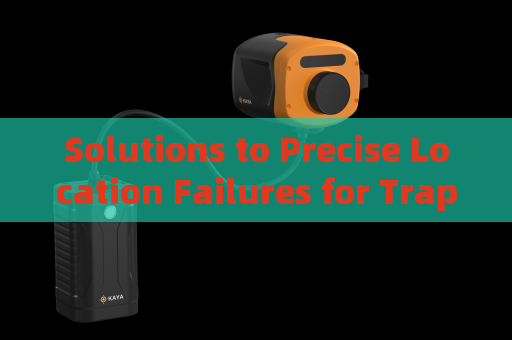
Solutions to Precise Location Failures for Trapped Victims Behind Flame-Occluded Vision with Fire Penetration Imaging In fire and rescue operations, a critical and persistent challenge is the precise location of trapped individuals when vision is completely occluded by intense flames. Dense, dynamic fire fronts not only generate extreme heat but also act as a brilliant, blinding optical barrier. This radiant emission saturates conventional imaging sensors, rendering them ineffective. The core problem extends beyond mere visibility loss; it is the failure to distinguish the silhouettes or movements of victims who may be situated directly behind the fire, perhaps near a window or within a doorway frame. Thermal imaging, while valuable for heat signature detection, struggles to differentiate a human form from the overwhelming thermal background of the fire itself, leading to dangerous delays and potential location failures. The urgent need is for a tool that can see through the optical interference of the flames to identify the specific position and posture of a person, thereby enabling a directed and rapid rescue intervention. The penetration imager addresses this exact failure point through its core capability of laser range-gated imaging, also known as gated imaging technology. This system is fundamentally designed to reject unwanted backscattered light and suppress intense, unstructured glare. It operates by emitting short, high-frequency pulses of laser light. A synchronized, gated camera opens its shutter only for the precise moment when the reflected light from the target area returns. Since light from the intervening flames—being much closer—returns earlier, the camera gate effectively ignores it. This temporal discrimination allows the system to collect the signal from the scene behind the flames while drastically suppressing the flare from the firefront itself. The result is a high-contrast image where the optical "noise" of the combustion is minimized, revealing details that are otherwise completely obscured. In practical application at a structural fire, a rescue technician deploys the penetration imager toward a window engulfed in flames. The operator adjusts the system's range gate to correspond with the distance of the room beyond the windowpane. The high-repetition-rate pulsed laser illuminates the scene, and the intensified gated camera captures the return signal. Visually, the violent flames washing over the window are subdued into a translucent, manageable haze on the monitor. Crucially, the interior space becomes discernible. The outline of furniture, the geometry of the room, and most importantly, the distinct form of a collapsed victim against a far wall come into clear view. This provides command with a definitive geographic coordinate within the structure, transforming the search from a blind probe to a precision-guided extraction. The capability to penetrate not only the flame but also the window glass—a transparent optical medium—ensures the victim's location is confirmed before crews commit to a high-risk interior attack through that specific access point. The effectiveness of this technology hinges on precise timing control between the laser pulse and the camera gate. The built-in micro-channel plate intensifier amplifies the weak returning signal, ensuring image clarity at operational distances. It is this deliberate, active rejection of the dominant firelight that achieves the reported three to five-fold improvement in visibility within the fire-affected zone. The penetration imager does not claim to see through thick, particulate smoke, which requires different mitigation strategies. However, by solving the specific problem of flame-occluded vision, it fills a decisive gap in technical rescue. The actionable intelligence it delivers—a precise location behind the optical barrier of fire—directly enables faster, safer, and more successful victim recovery, turning a scenario of potential location failure into one of confirmed rescue.