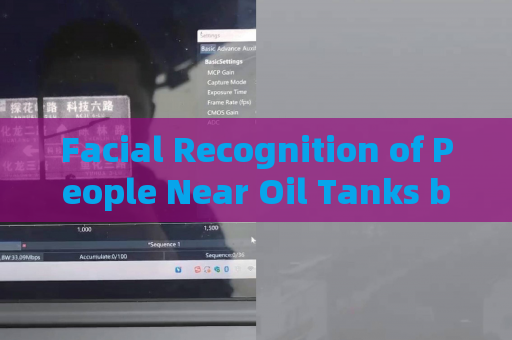
Facial Recognition of People Near Oil Tanks by the Penetration Imager Under Port Light Glare Night Vision Interference with Strong Light Suppression Imaging presents a critical surveillance challenge. Security perimeters around oil storage facilities are often illuminated by powerful port lighting to deter intrusions. However, these same lights create intense glare and deep shadows at night, blinding conventional night vision and CCTV cameras. This severe contrast renders areas near tanks as visual blind spots, where unauthorized individuals can operate undetected. The combination of artificial light pollution and natural low-light conditions forms a perfect concealment, turning a key security measure into a liability that compromises threat assessment and facial identification capabilities. The penetration imager directly addresses this dilemma through its core function of strong light suppression imaging integrated with laser range-gated technology. This advanced optical instrument utilizes a high-repetition pulsed laser and a gated intensified camera. The system actively illuminates the scene with precise, controlled laser pulses. A synchronized timing module opens the camera's shutter only for the duration when the reflected light from the target returns, effectively rejecting all other ambient light, including the overpowering port glare. This process, known as range-gating, allows the penetration imager to isolate the person of interest near the oil tank from the disruptive background illumination. It enhances image contrast exclusively within the gated distance slice, cutting through the optical interference of light glare. In practical deployment, the operator focuses the penetration imager on the shadowed areas adjacent to oil tanks. The system's laser illuminator and beam expander project invisible, eye-safe pulses toward the zone. The gated camera, with its micro-channel plate intensifier, captures only the light returning from the specified range where a person might be present. The blinding port lights are effectively filtered out in the electronic domain. Consequently, a clear, high-contrast image of the individual's face is rendered on the monitor, enabling reliable facial recognition software analysis. The active imaging nature of the penetration imager ensures high resolution at significant distances, overcoming the backscatter from atmospheric particles often exacerbated by the port's ambient light. The effectiveness is rooted in treating the intense, direct light glare as an optical medium to be penetrated, similar to fog or a window. The penetration imager does not amplify the glaring light like traditional night vision; it suppresses it through precise temporal filtering. This allows for detailed facial feature extraction even when the subject is silhouetted against or standing beside the bright infrastructure. The capability to see clearly into these high-contrast nocturnal environments transforms perimeter security from reactive to proactively deterrent, ensuring continuous biometric monitoring capability under the most challenging port lighting conditions. This application underscores the critical role of specialized optical instruments like the penetration imager in modern infrastructure protection.