In VIP protection details, the covert detection of surrounding suspicious vehicles poses a persistent operational hurdle. Security teams must identify potential threats from nearby cars without alerting occupants, a task complicated by environmental factors like tinted windows, reflective surfaces, and adverse weather conditions such as fog, rain, or haze. Traditional optical systems often fail to penetrate these optical media, resulting in obscured visuals that compromise threat assessment. The challenge intensifies in dynamic motorcade scenarios where rapid, discreet imaging is essential to preempt risks. This gap in capability underscores the need for an advanced solution that operates covertly while delivering high-fidelity intelligence. The penetration imager addresses this exact pain point, leveraging cutting-edge optical technology to transform VIP security protocols.
The penetration imager functions through laser range-gated imaging, an active system that employs a high-repetition-rate pulse laser and a gated camera with a microchannel plate intensifier. This configuration enables precise synchronization of light pulses with camera exposure, effectively mitigating backscatter from atmospheric particles. For VIP security, its pivotal feature is the ability to penetrate optical media like vehicle windows, aircraft windows, or glass barriers, rendering clear images of interiors despite reflections or obstructions. Simultaneously, it resists interference from fire, mist, drizzle, or snow, maintaining high contrast and resolution over extended distances. By focusing solely on light-based penetration, the imager avoids the limitations of conventional surveillance, offering a stealthy means to scrutinize suspicious vehicles without physical intrusion or detectable signals.
Operationally, the penetration imager is deployed from concealed vantage points during VIP movements, such as within escort vehicles or stationary posts along routes. Security personnel use it to scan surrounding cars in real-time, capturing detailed imagery of passenger compartments and cargo areas. The system’s high-resolution output allows for identification of anomalous objects or behaviors, such as concealed weapons or erratic movements, while its covert nature preserves operational secrecy. In practice, this translates to enhanced situational awareness, enabling teams to differentiate between benign and threatening vehicles swiftly. Integration with command centers facilitates immediate analysis, supporting decisions without alerting suspects. The imager’s robustness in diverse weather ensures reliable performance during critical transit, reducing false negatives and elevating protection standards.
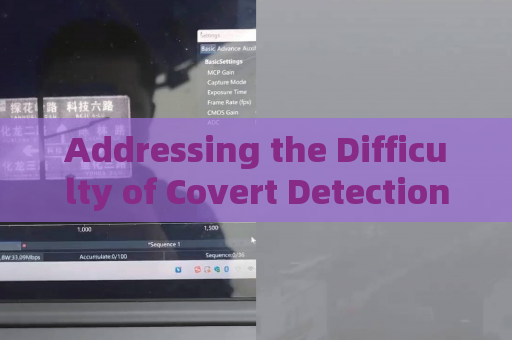
Optimizing this application involves tailoring the penetration imager for low-light urban environments and synchronizing it with existing security networks. Its capacity to penetrate optical disturbances like light fog or window glare allows for consistent imaging in complex settings, where traditional methods falter. Training focuses on rapid deployment and minimal exposure, ensuring operators maximize stealth while leveraging the technology’s range advantages. By embedding the imager into mobile units, VIP teams achieve a proactive defense layer, seamlessly assessing vehicle threats without disrupting motorcade flow. This refined approach underscores how the penetration imager redefines covert detection, merging optical innovation with tactical precision to safeguard high-profile individuals against evolving risks.