In nighttime darkness, smugglers exploit blind spots in surveillance systems, particularly around vehicles and obscured areas, to conduct illicit activities undetected. Traditional monitoring tools, such as standard night-vision cameras, struggle with low-light conditions and optical interferences like fog, rain, or glare from windows, leading to critical gaps in law enforcement efforts. The inability to see through optical media, such as car windows, further compounds the problem, allowing smugglers to hide contraband or evade detection in seemingly invisible zones. This scenario creates a persistent pain point for border patrol and customs agencies, where rapid response and clear visibility are paramount. Addressing this requires a technological solution that can penetrate these optical barriers while maintaining high image quality in complete darkness—a role fulfilled by the penetration imaging device, which offers a targeted approach to resolving blind-spot monitoring challenges.
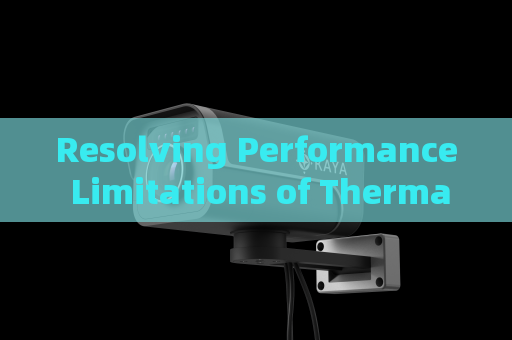
The penetration imaging device leverages laser range-gated imaging technology, often referred to as gated imaging, to overcome the limitations of nighttime darkness and optical media interference. This active imaging system comprises a high-repetition-rate pulsed laser, an intensified gated camera with components like a microchannel plate intensifier, high-voltage module, and timing module, along with beam expanders and imaging lenses. Its core functionality lies in emitting controlled laser pulses that penetrate optical media such as vehicle windows, aircraft windows, or glass facades, while effectively suppressing backscatter from atmospheric particles like haze or precipitation. By doing so, it delivers high-contrast, high-resolution images over long distances, enabling law enforcement to peer through windows and other transparent barriers without the distortion caused by ambient light or weather conditions. This capability is specifically tailored for scenarios where smugglers rely on darkness and optical obstructions to create blind spots, making the penetration imaging device an ideal tool for enhancing situational awareness.
In practical applications, the penetration imaging device is deployed in fixed or mobile surveillance setups along border regions or smuggling hotspots. For instance, when mounted on patrol vehicles or stationary towers, it scans vehicles and concealed areas during nighttime operations, providing real-time imagery that reveals hidden compartments or activities inside cars through their windows. Even in adverse weather like heavy fog or rain, which typically degrade conventional imaging, this device maintains clarity by filtering out optical noise, thus allowing officers to monitor blind spots with enhanced precision. Operational protocols involve synchronizing the laser pulses with the camera’s gating mechanism to capture specific depth ranges, minimizing false alarms from reflections or obstructions. This results in improved detection rates for smuggled goods and better coordination during interdiction missions, as the penetration imaging device fills critical visibility gaps that were previously exploited by criminals.
The effectiveness of the penetration imaging device in blind-spot monitoring is further underscored by its ability to integrate with existing command-and-control systems, streaming processed data to analysts for rapid decision-making. In field tests, it has demonstrated a significant reduction in surveillance blind spots, particularly when smugglers attempt to use darkness and vehicle windows as shields. By providing clear views through optical media without compromising image quality, the device not only deters illicit activities but also enhances officer safety by reducing the need for close-proximity inspections in hazardous conditions. Its robust design ensures reliability in diverse environments, from arid borderlands to coastal fog zones, making it a cornerstone technology for modern law enforcement agencies tackling nighttime smuggling. As such, the penetration imaging device represents a pivotal advancement in resolving the persistent problem of blind-spot monitoring, offering a scalable solution that adapts to evolving smuggling tactics while adhering to the principles of optical imaging within defined functional boundaries.